
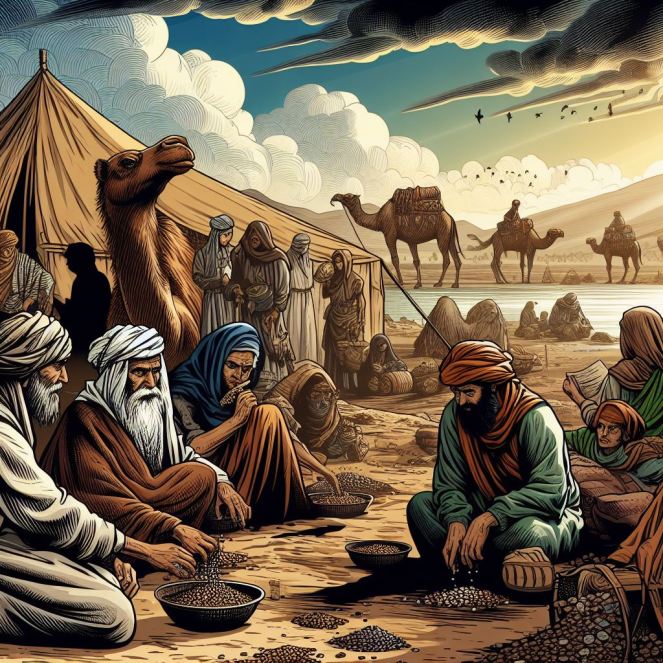
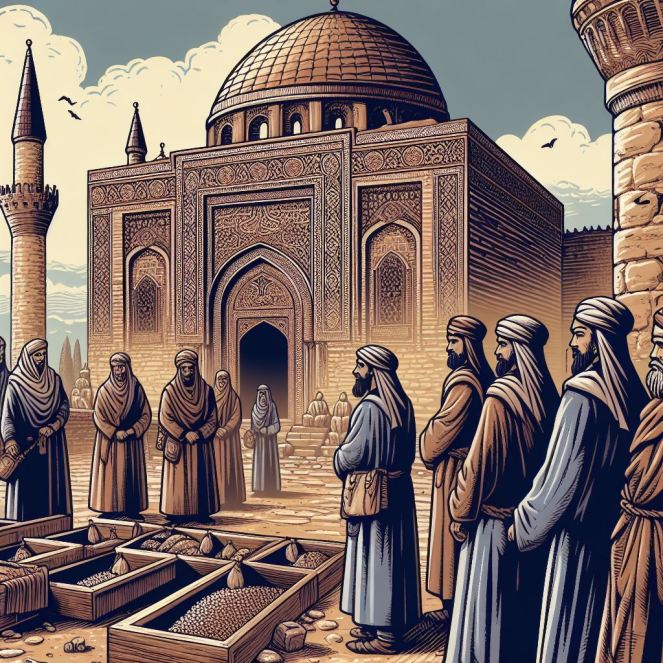
When the famine hit Arabia, People from all over the country traveled to Madinah. They were seeking refuge in the capital. Omar ordered his assistants to prepare camps in which the refugees could stay.
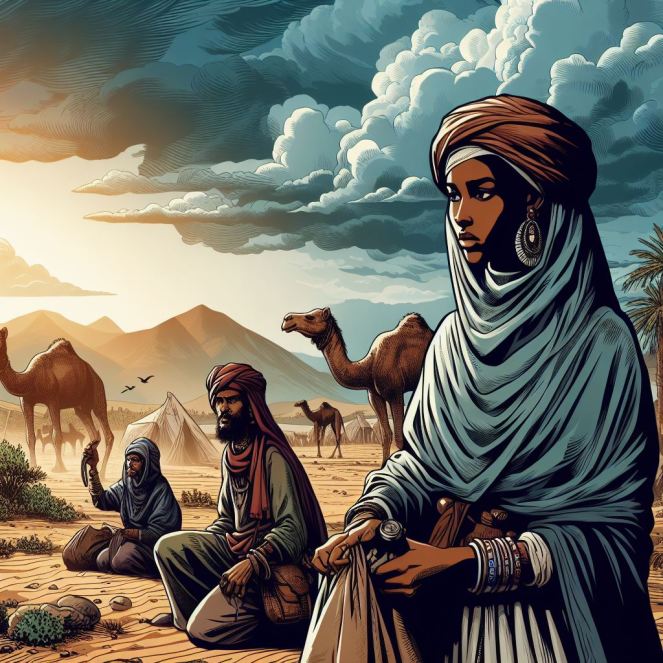
He established a treasury house for grains and clothes. All the available crops were harvested and sent to this treasury. Records were developed for all kinds of grains, nutrients and clothes.


Thereafter, every family received its share. Madinah received 60,000 refugees. That was a huge number at that time. Omar and his companions needed all the help they could get. As such, Omar sent messages to all his deputies. He asked for their help in rescuing the Arabs.


Companion Amr Ibn Al-‘Aas sent a caravan from Egypt. It consisted of 1000 camels carrying flour and clothes. He also sent 20 ships through the Red Sea. They were carrying different kinds of legumes and necessary nutrients. Companion Abu-Obaydah Ibn Al-Jarrah arrived at Madinah leading another caravan from Palestine. It consisted of 4000 camels carrying food. Companion Mu‘aweyah Ibn Abi-Sufyan sent a caravan from Damascus. It consisted of 3000 camels carrying more food. Another caravan arrived from Iraq. All the region’s countries responded to the rescue messages Omar sent. Caravans kept on arriving one after another to save their brothers at Arabia.


Here, you must learn a very important fact, children. Our Middle Eastern region contains different neighboring countries. Nonetheless, they are all one nation. Their history is deeply connected. Their civilizations form the cornerstone upon which our modern world stands. They share ancient parentage heritage. They have an endless number of marital relationships. Their ancestry bloodlines are intertwined. Like Prophet Muhammad reunited the Arabs, his companions reunited the region’s countries. One Middle Eastern nation, one family. Without these solidarity actions, tens of thousands would have died. The chivalry of that generation will always stand as a beacon of light for the sincere. May the deceived open their hearts and see.


Omar dispatched his supervisors to Arabia’s entrances. He ordered them to direct the coming caravans to all parts of Arabia. He planned to save as many people as possible. He went out every day with his assistants to check on the refugees. At night, he went out on night patrols to make sure that all people were safe and sound.


One night Omar was inspecting a refugee camp. He noticed a fire at a faraway place amidst the desert. He said to his young assistant, Aslam, “These must be travelers seeking our refuge. Let’s go check on them.” They hurried towards the light source. When they approached it, they saw a woman and her young children. The children were crying while the woman stirred the ingredients of a pot she had placed over the fire.
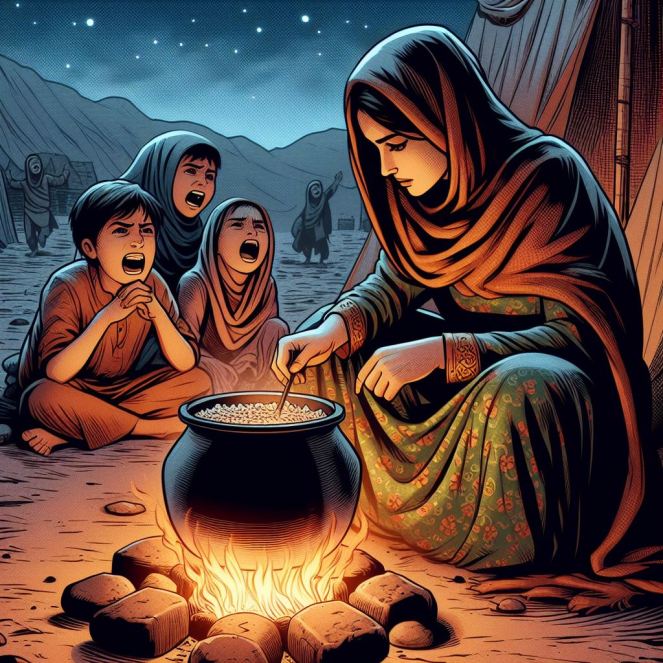
Omar said, “Peace be upon you.” The woman replied to his greetings, so he said, “Can I come closer?”
The woman said, “Only if you bring good news.”
Omar approached her and asked, “Why are you out here all by yourselves?”
She said, “We failed to reach our destination before nightfall. So here we are, spending the night in this cold.”
Omar asked, “What’s wrong with your children? Why are they crying?”
She answered, “They are hungry.”
He asked, “And what’s in that pot?”
She said, “Water. I stir it till they fall asleep. Allah is sufficient for us against Omar.”
The poor woman was trying to deceive her children to sleep. She only acted to prepare them dinner. In reality, the pot held nothing but water.
Omar said, “May Allah forgive you. How can Omar learn about you out here?”
She said, “He assumed our responsibility; yet, he is inattentive to our condition.”

On hearing her words, Omar turned around. He started running and ordered Aslam to follow him. When they reached the grains treasury house, he picked a sack of flour and a vat of butter. He ordered Aslam to help him carry the sack on his back. Aslam tried to carry it for him, but Omar refused. He said, “Will you carry my sins in front of Allah? Put it on my back.” Aslam obeyed the order and they went on their way.
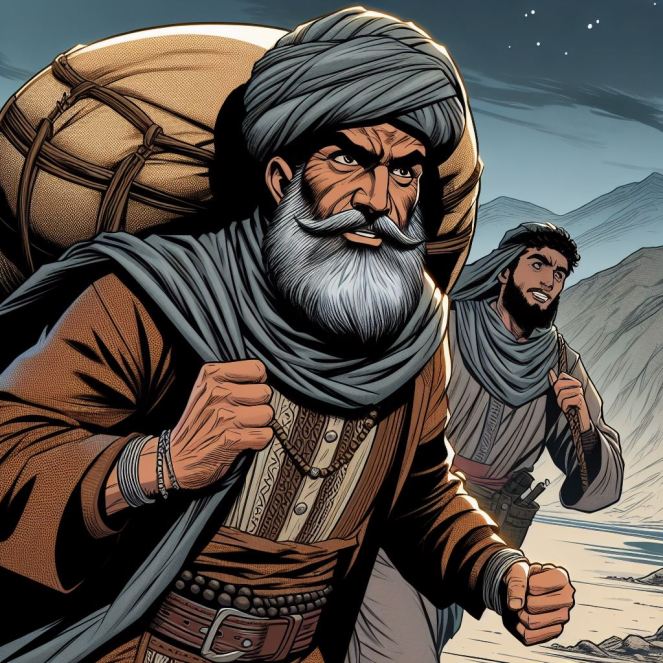
When they reached the woman, Omar threw down the heavy sac. He untied it, pulled out some flour and threw it in the pot.
“Add more flour and I will stir for you,” he ordered the woman.


Aslam reported that Omar continued to steer and blow under the pot to kindle the fire. When the food was ready, he ordered the woman to bring him a large plate. He poured the food into it and told the woman to feed her children. He spread the porridge on the plate to cool it down while the woman fed her youngsters.

When they ate their full, he got up. The woman thanked him and said, “May Allah reward you. A man like you deserves to be our prince more than Omar.” Omar calmed her down. He said, “Maybe tomorrow you’ll find me in his place,” and then left.
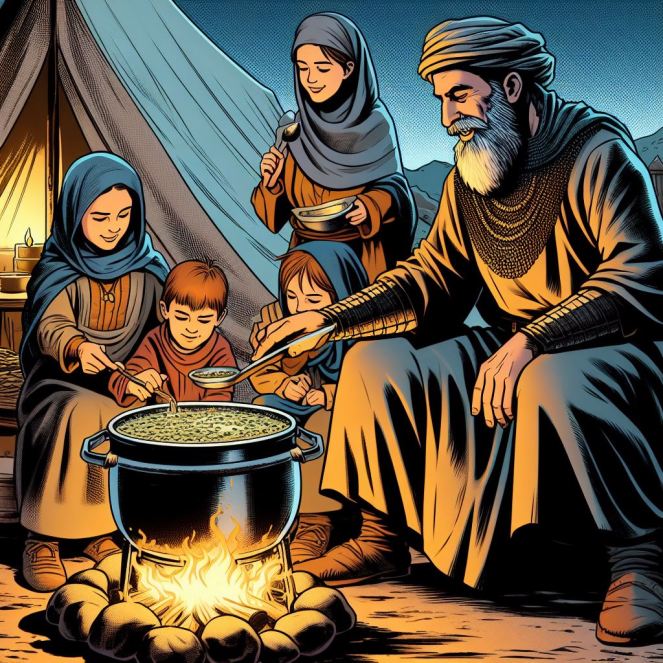
When Omar and Aslam were far enough, Omar turned around. He watched the children play till they fell asleep. Aslam asked him why he did that. Omar said, “Hunger kept them awake and made them cry. I preferred not to leave before I saw them play and go to sleep.”
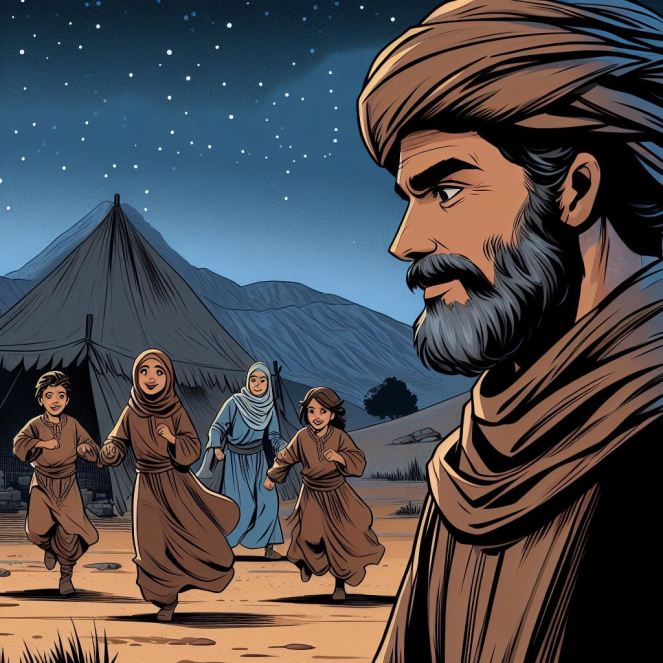
Omar continued to serve the people. His honesty and sincerity were matchless.
Another night, Omar and companion Abdurrahman Ibn ‘Auf were guarding a caravan. As they prayed, they heard a baby cry. Omar continued to pray thinking the baby’s mother would calm him down.
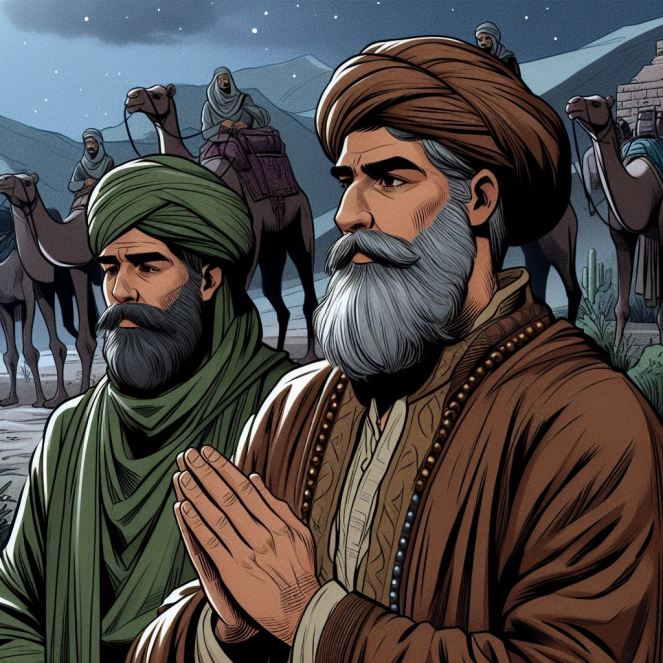
A while later, the baby was still crying. This alerted Omar. He got up and walked towards the house from which the sound came. He stood behind the door and said, “Attend to your baby.” He then returned to his place and continued to pray. A while passed by before the baby cried again.

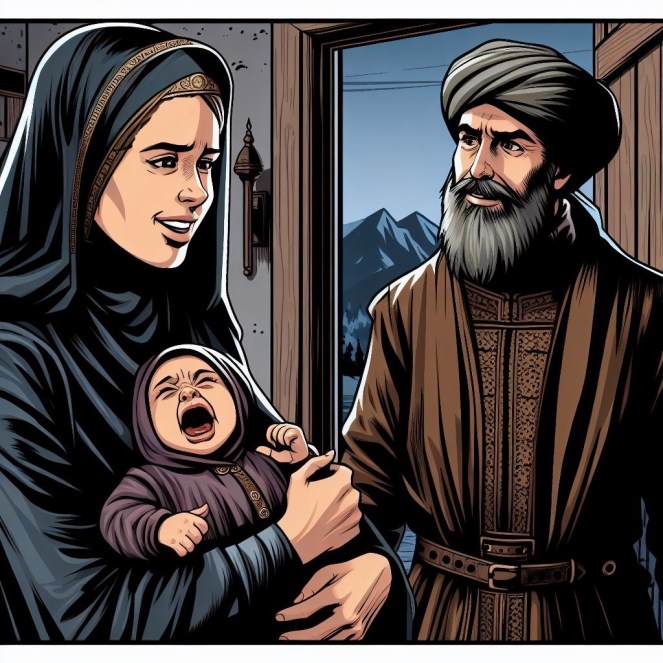
Omar walked over to the house and repeated what he said before. Near the end of the night, Omar heard the baby cry for the third time. He was enraged. He walked over to the house and knocked on the door. The baby’s mother opened the door. Omar said, “Don’t you fear Allah. Why don’t you attend to your baby?”
The woman said, “Old man, you have bored me tonight. My baby is crying because I’m trying to wean him.”
Omar asked, “How old is he?”
The woman answered, “He is 9 months old.”
Omar said, “He’s still young. Why are you eager to wean him?”
She said, “Omar only allows weaned children to get a share from the grain house. My share does not enable me to breastfeed my baby.”
On hearing her answer, Omar said, “Don’t wean the child. I’m Omar. From now on, every born child will have a share from the grain house.” The next day, he ordered his assistants to declare this to all people. He sent messages to all cities holding that order.
Companion Talhah Ibn Obayd reported that he saw Omar entering some houses at night. One in particular, he visited every night. Talhah felt curious. Why would Omar visit that house every night? In the morning, he visited that house. When he knocked on the door, an old woman’s voice invited him in. Talhah walked in to find that the woman was blind and lived alone. He asked her, “Who is that man who visits you every day?”
She answered, “I don’t know him. Every night, he brings me some food and attends to my needs.”

During one of his night patrols, Omar saw a tent that wasn’t at that place the night before. A man was sitting outside looking distressed. A moaning sound came from inside the tent. Omar walked over towards the man. He greeted him and said, “Where are you from?”
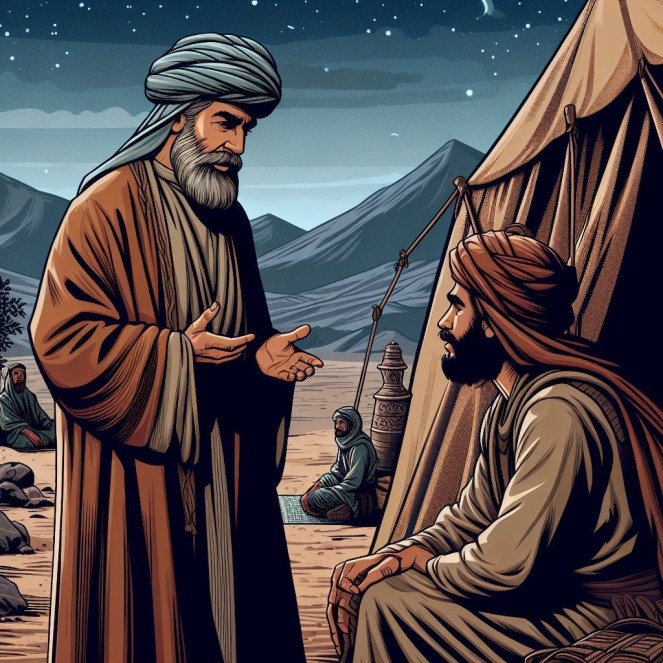
The man said, “I’m a Bedouin. I’ve come seeking help from the prince of believers.”
Omar asked, “And what is that moaning noise I hear?”
The man said, “My wife is going through labor.”
Omar asked, “Does she have someone to help her give birth?”
The man answered in the negative. Omar immediately took off towards his house. He asked his wife, Um-Kolthoom, Would you be interested in earning Allah’s reward for a good deed?”
Um-Kolthoom asked, “What deed is that?”
He said, “A woman is about to give birth, and she has no one to help her.”
Um-Kolthoom said, “Sure. Let’s do it.”
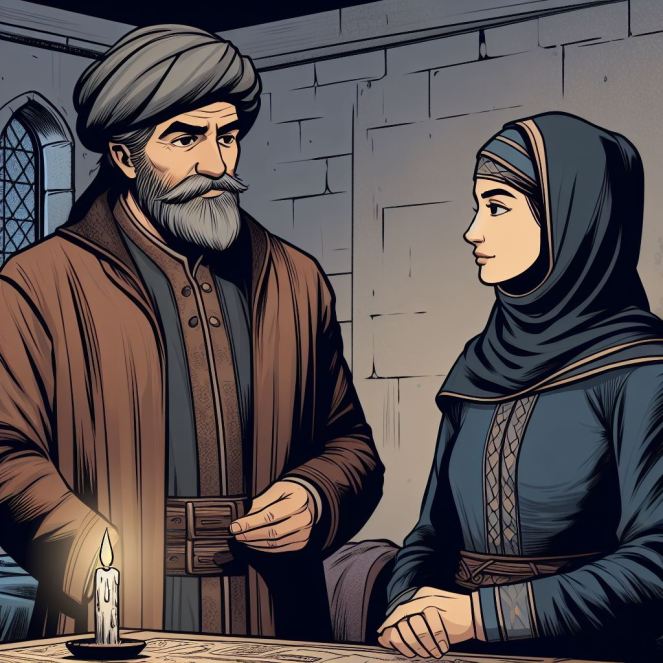
She prepared all the things she would need. Omar brought a sack of flour and some butter. He carried the stuff and led Um-Kolthoom to the tent. Um-Kolthoom entered to help the woman while Omar sat with her husband outside.
“Kindle the fire,” Omar said to the man. He then started to prepare some food.

A while later, Um-Kolthoom called from inside the tent, “O prince of believers, tell your companion that he has a baby boy.”
On hearing her words, the man stepped back. When he learned that the man serving him and his wife was Omar himself, he was shocked.
Omar calmed him down. He gave the pot to Um-Kolthoom and said, “Feed the woman.”
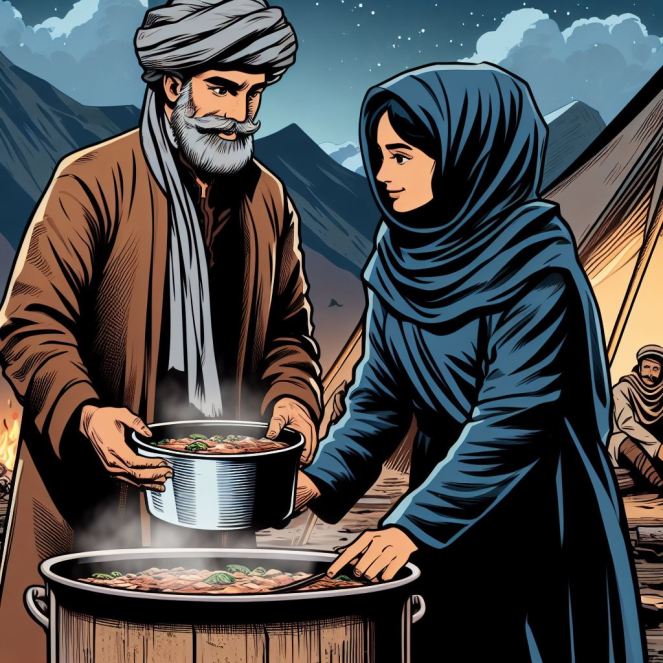
After Um-Kolthoom fed her, she placed the pot at the tent’s entrance. Omar carried it to the man and said, “Now, you eat as well. You have spent a hard night.” He then called Um-Kolthoom out and said to the man, “Come to me in the morning. I will attend to your needs.”
The next morning, the man went to Omar. Omar granted him what he asked for. He also added his child’s name to the newborn’s records. Based on the law Omar had placed, every newborn deserved a share from the grain house.
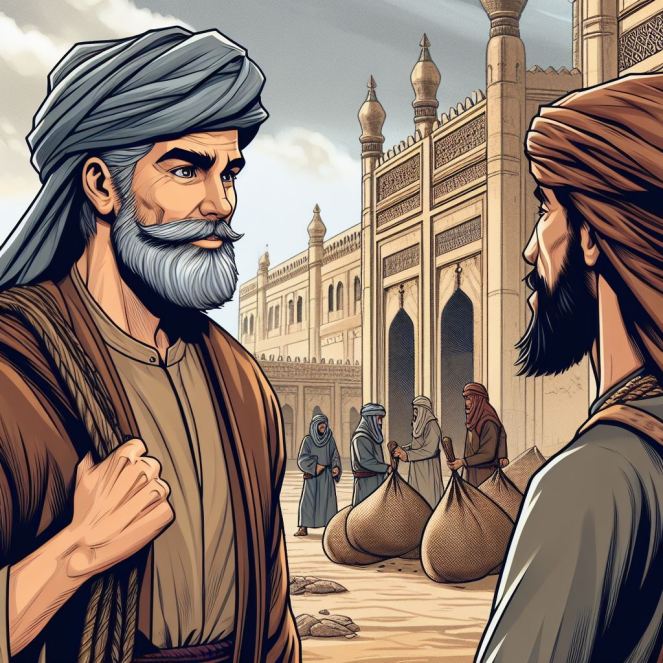
After the famine was over, Omar continued to serve the people and attend to their needs. He established new irrigation projects to help cultivate more land. He issued a law allowing whoever reclaims a piece of land to own it. He issued a warning to farm owners. ‘If they didn’t attend to their lands for two consecutive years for no reason, its ownership would move to the state.’


He visited Sham and checked on its people. He asked them about his deputies’ performance. Most people expressed their content. Omar asked to stay as a guest at Companion Abu-Obaydah Ibn Al-Jarrah’s house. When he entered, he found nothing but a sword, a shield, and a small traveling kit. Omar asked out of pity, “Why didn’t you put some furniture in the house?” Abu-Obaydah said, “O prince of believers, that’s enough to take me to my destination.”

That was how the prophet’s companions viewed this life. It’s nothing but a trip one has to take. The real abode is that of the hereafter. May Allah be pleased with them. May Allah revive their spirits in our hearts and minds. Amen.
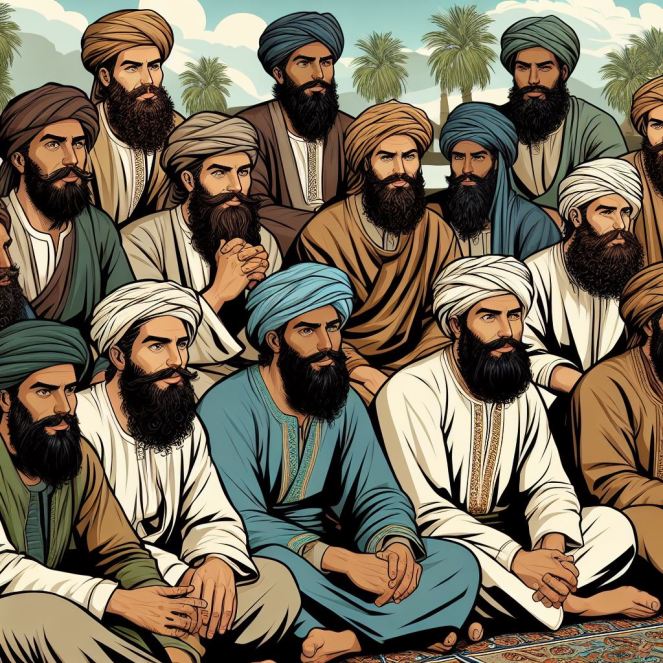
In the last year of his life, Omar performed pilgrimage. He said, “If I live to the next year, I will visit all the countries in the region. I will listen to the people’s demands and make sure they are taken care of. O Allah, the number of my subjects has increased vastly. My ability to fulfill their needs is getting weaker. Let me return to you without being negligent or disregardful.”
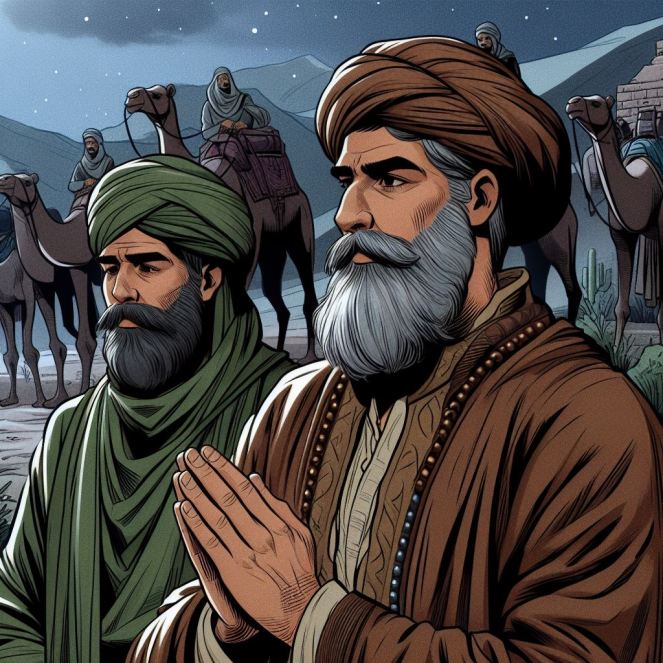
Omar was a sincere Just ruler. His people loved him. This was regarded as a huge threat by Muslims’ enemies. On top of those were the Magi Persians. A magi named Abu-Lo’Lo’ah from Persia traveled to Madinah. He met Omar and asked for his permission to live in Madinah and learn about Islam. On seeing that the man had his family with him, Omar accepted. He gave him a house and a job that fitted his knowledge. That man was a weasel. He watched Omar for weeks. He plotted silently and waited for the proper time to carry out his secret mission.
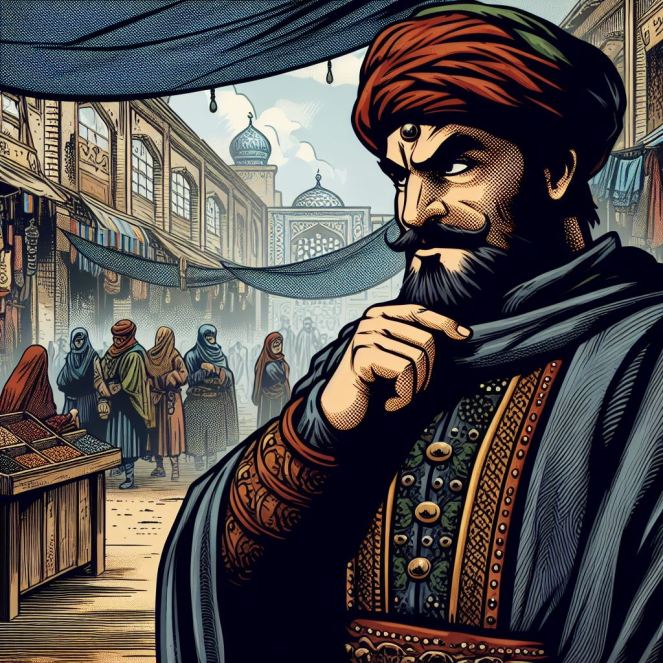
One day, during Al-Fajr prayers, Abu-Lo’Lo’ah jumped from between the lines and stabbed Omar six times in the back. The companions grabbed the criminal, but it was too late. When Omar turned and saw Abu-Lo’Lo’ah, he said, “All praises be to Allah. My killer is not a Muslim.”

The companions carried Omar home. Physicians tried to save him, but their trials were in vain. Omar ordered his son Abdullah to visit the Prophet’s wife, Lady ‘A’ishah. “Ask for her permission to let me be buried next to my companions, the Prophet and Abu-Bakr.”

Lady ‘A’ishah accepted, saying, “I hoped to be buried next to my husband and my father. Nonetheless, I won’t deny a dying man his wish. Verily, he is a good man.”
Abdullah hurried back and informed his father that she had accepted his demand. Yet, Omar said, “Ask for her permission again after I die. Maybe she is embarrassed to refuse while I live still.”
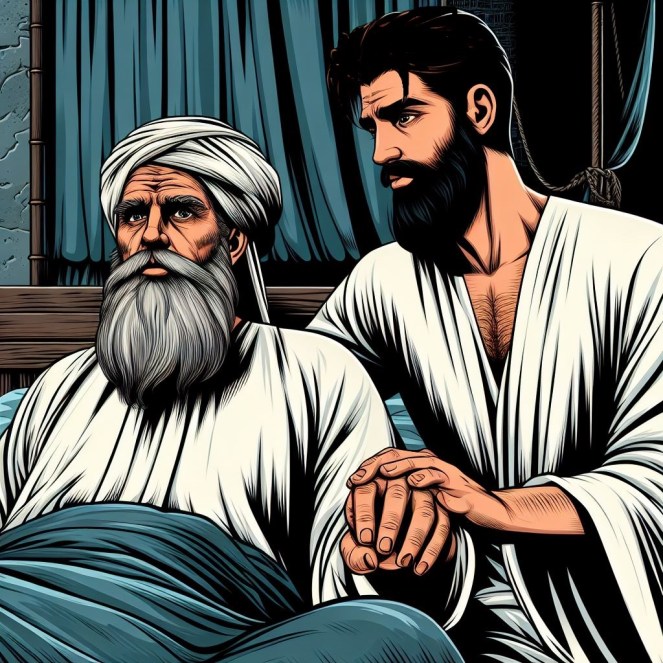
Omar died at the age of 63 like Prophet Muhammad and Abu-Bakr. After his death, his body was buried next to his companions as he wished. Together, they stayed in life. Together, they lie buried in death. And together, they shall be revived on the judgment day. 1400 years have passed since their death. Their bodies still lie where Lady ‘A’ishah’s room once stood next to the Prophet’s mosque. Millions of Muslims visit their graves every year. They visit them and remember their marvelous struggle to make victorious what’s right. They tell their stories to their children and teach them how they lived. From one generation to the next, they live in our tales, history, deeds, and legacy. What a magnificent legacy that is.
Omar Ibn Al-Khattab, The Prince of Believers – Part VIII.
Englished and Recomposed for 5th graders by Ehab Shawky.
Copyright © Ehab Shawky, 2024.
All rights reserved.
Discover more from Islamic Methodologies Made Easy
Subscribe to get the latest posts sent to your email.
 Islamic Methodologies Made Easy