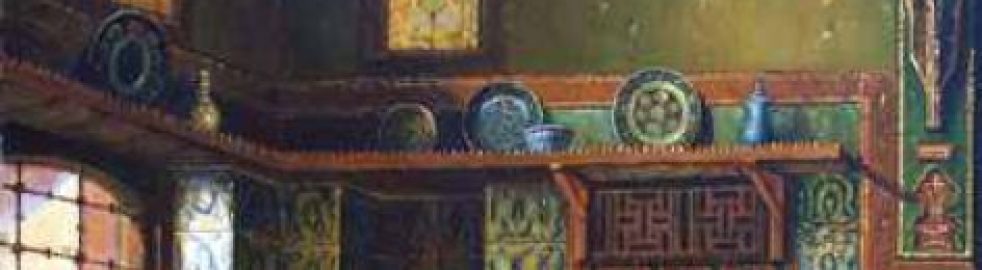
The judicial system was a priority for Omar. As such, he instated the most knowledgeable companions as judges. Companion Abu-Musa Al-Ash‘ary was his judge in Basra. He sent him an assignment letter. It reads as follows:
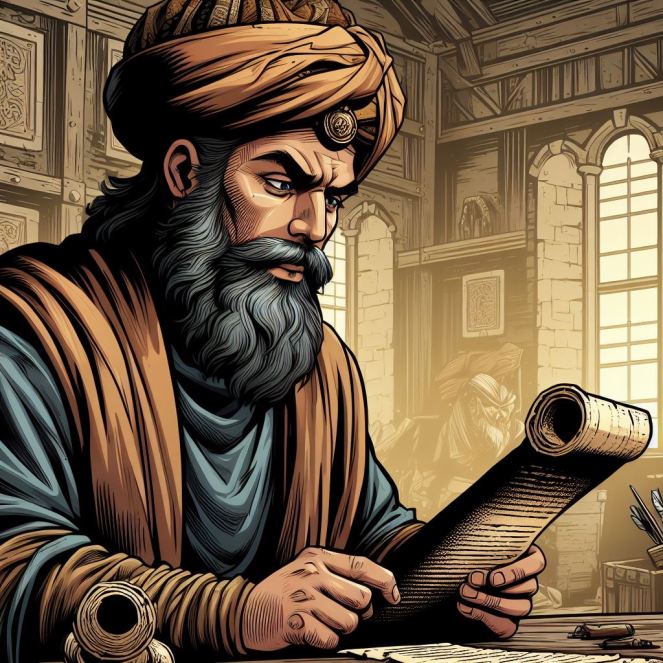
“In the Name of Allah, the Most Gracious, the Most Merciful.
From Allah’s servant, Omar Ibn Al-Khattab, to Abu-Musa Al-Ash‘ary,
Peace be upon you faithful brother. Know that Judiciary is an obligation. You must fully understand every case raised to you. If what’s right becomes manifest, issue your verdict and order its application. Justice is served only when it’s applied.
Equate between all people in your court, even in your looks. The nobles must not hope to be favored. The poor must not despair of receiving a fair trial.
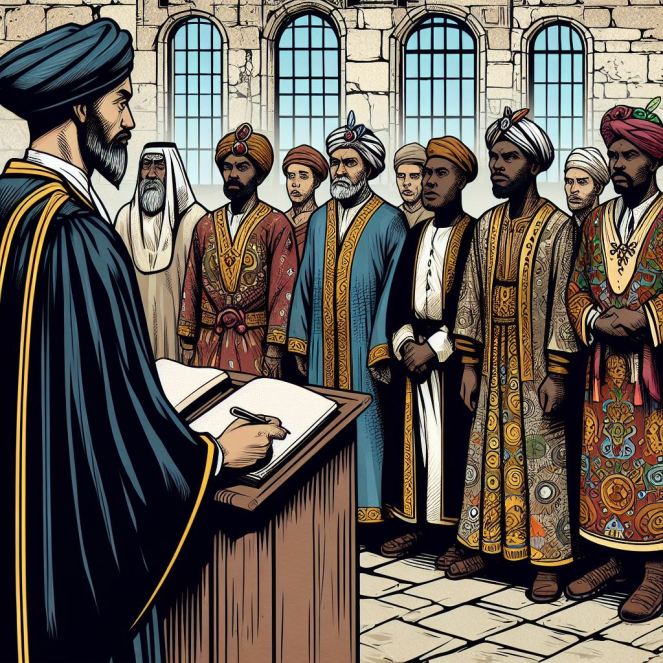
Whoever has a claim, must submit evidence. If there was no evidence, and the accused denies the claim, he must solemnly swear he’s innocent.
Reconciliation is permissible except if it entails an unlawful matter or prohibits a lawful matter.
Do not let a wrong verdict stop you from reopening the case. What’s right must always triumph. Revise the case and issue the most just verdict.
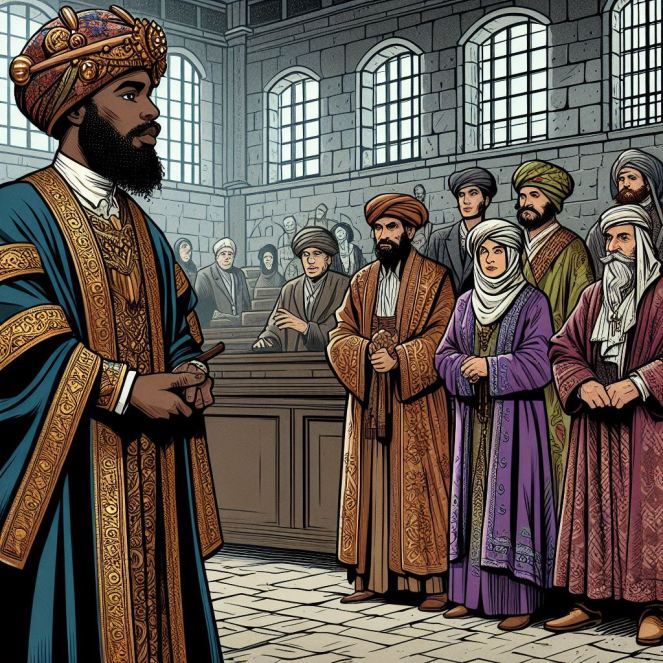
Some cases may have no legal ruling in our law. You must grasp a full understanding of such cases. Compare them to the most similar cases in our law. Deduce all possible outcomes. Finally, issue the verdict you believe is the most pleasing to our creator.
If a person raises a claim, place an appropriate time limit for his case. If he fails to produce the evidence supporting his claim, cancel the case. You must not allow doubt to linger.
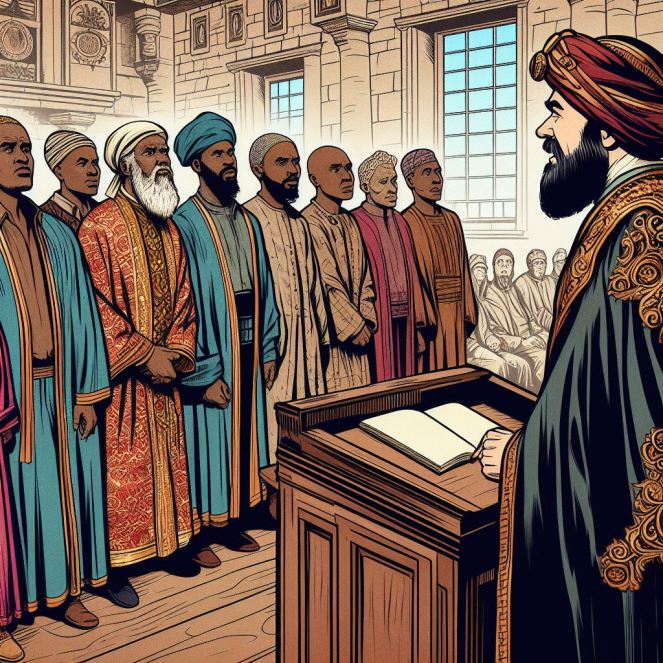
Muslims’ testimonies against one another are all equal. The exceptions are for a previous felon, a person convicted of perjury, and a close relative or ally. Allah orders you to ward off doubt.
Never resent listening to a complainer. Never hesitate to enforce justice. This is the burden for which a judge is rewarded by Allah. Purify your intentions. If you do so, Allah will support you. If you don’t, Allah will fail you. Allah’s rewards are marvelous. His endowments are never-ending. Peace be with you.”
The previous message was Omar’s code for judiciary. He applied it throughout his caliphate.

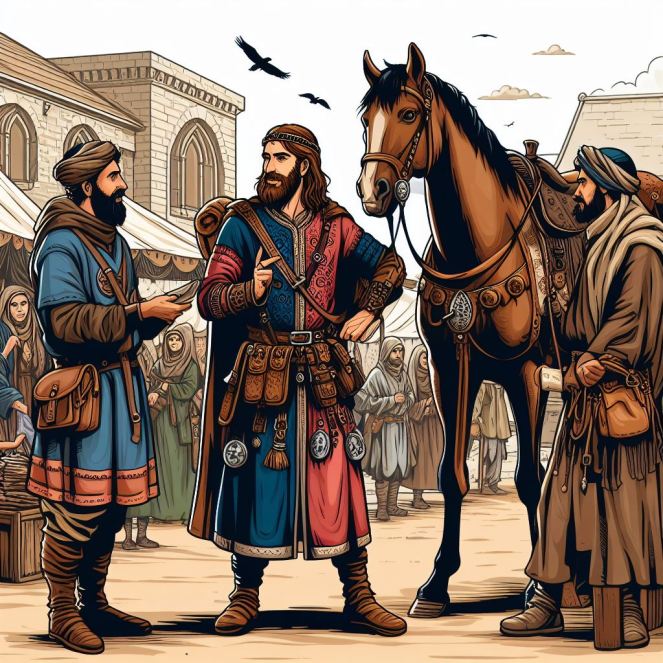
Muslims freed Egypt from the Roman occupation during Omar’s reign. Omar instated companion Amr Ibn Al-‘Aas as his deputy there. One day, two men and a teenager entered Madinah. One of the men was a Christian Egyptian who had a complaint. The teenager was his son. The second man was their translator.

They found Omar in the mosque. The Egyptian said, “I’ve come seeking justice. Your deputy’s son called for a horse race. My boy contributed and won the race. Angered with his loss, your deputy’s son swore at my boy and hit him with his whip. I’ve come seeking justice for my boy.” On hearing the man’s words, Omar said to his assistant, “Summon Amr and his son immediately.” Then he turned to the Egyptian and said, “You’re our guest until Amr arrives.”

A few weeks later, Amr and his son were standing in front of Omar. Omar interrogated them and found that the Egyptian’s complaint was true.

Omar handed the man a stick and said, “Avenge your boy equitably.” The Egyptian hit Amr’s son avenging his boy.

When he was done, Omar said, “Hit Amr, too.” Amr was troubled. The Egyptian said, “O prince, Amr’s son hit my boy. I have avenged my boy from him.”

Omar said, “If you did hit Amr, I wouldn’t have stopped you. His son committed this crime relying upon his father’s protection.” Omar then glared at Amr and said, “How dare you treat your subjects like slaves while they were born free, Amr?” Amr said apologizing, “My prince, the man never complained to me. I never knew of what happened.”

That was how Omar understood justice. He didn’t hesitate to punish a man from his own kin when he wronged a stranger from another country. He didn’t reduce the sentence against a man of his faith when he oppressed a man from another faith. Justice must be served.

A Roman Muslim reported the story of his faith. He said, “I was sent as a messenger from Caesar to Omar. My mission was to inspect Omar’s conditions and report back to my emperor.

When I entered Madinah, I asked the people, ‘Where can I find your king?’ The answer I got was, ‘We have no king. We have a leader, a prince. He’s inspecting the city outskirts. Head that way. You will find him there.’
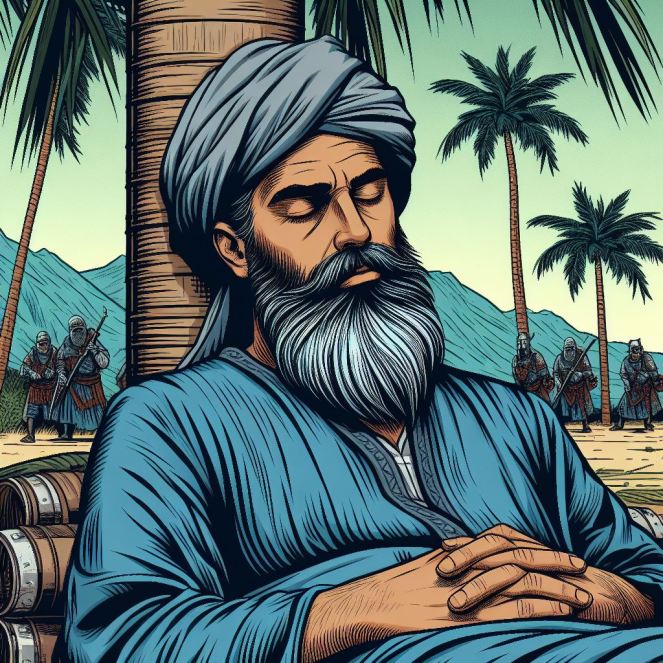
I continued to look for Omar until I found him. He was resting on the ground. He leaned his head on his staff, and sweat covered his face. When I saw him in that condition I was shocked. Could this be the man my king fears?! Only a just ruler can sleep safely in the open like this.
Caesar lived in a palace surrounded by hundreds of guards. Nonetheless, he was always scared. At that moment, Islam entered my heart. I completed my mission and reported back to Caesar. Later on, I returned to Madinah and embraced Islam.”

The previous story happened during a famine that had hit Arabia. In that year, Omar ate one kind of food, one meal every night. It was bread and oil. His stomach often rumbled. Sometimes, his assistants could hear its noise. They would offer to find him something to eat. He always refused saying, “Let it rumble all it wants. I swear not to eat until all people are fed.”

It seems that when Caesar sent his inspector, he was lingering to seize the opportunity and attack Muslims. However, what the messenger told him made him fear such a move. No man is more feared or revered than a just ruler.

In the Islamic law, if an adult sane person breaks into someone’s property, and steals what’s equal to or exceeds the price of 35 grams of silver, his hand is cut-off.


Nonetheless, punishments are only applied if the criminal is found uncompelled to commit his crime. The surrounding conditions must be studied and evaluated by the judge. If a man steals some food out of hunger, or steals money to buy an expensive medicine, his hand is not cut-off. He is sentenced to payback his debt. In this case, it will be paid back from the Muslims’ treasury. It is the ruler’s job to make sure that such a man is employed and can provide for himself and his family.


Omar stopped the application of the theft punishment during the famine. This was to ward-off suspicion that the person stole because of hunger.
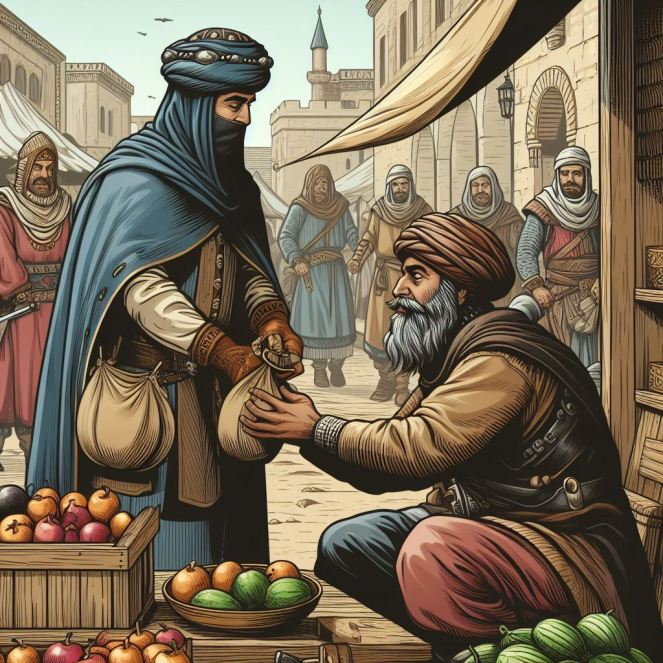
While dispatching one of his deputies, Omar asked, “What would you do if a thief was arrested at your city?” The deputy answered, “I will cut-off his hand.” Omar said, “And I will cut-off yours if a hungry man or an unemployed person comes complaining from your city. Allah destined us to rule over His servants to satisfy their hunger, shelter their bodies, and make it easy for them to practice their crafts. If we succeed in providing them with these things, we get our reward from Allah. Allah created the hands to work. If they don’t find a righteous job, they will search for one in wrongdoing. Employ the hands of your subjects in what’s lawful before they employ them in what’s unlawful.”


What else happened during Omar’s reign? How did he save the people from famine? How did he protect the weak and the needy? I will tell you more about Omar’s outstanding caliphate, but that’s enough for tonight. Sleep tight sweat hearts. May your days be ones of justice and dignity.
Omar Ibn Al-Khattab, The Prince of Believers – Part VII.
Englished and Recomposed for 5th graders by Ehab Shawky
Copyright © Ehab Shawky, 2024.
All rights reserved.
Discover more from Islamic Methodologies Made Easy
Subscribe to get the latest posts sent to your email.
 Islamic Methodologies Made Easy