Faith is not a list of rules. It’s not a book of DOs and DON’Ts. Faith is power. If it fills one’s heart and mind, it changes him or her into a remarkable person. A person whose life would be rich with lessons. That’s what Omar Ibn Al-Khattab’s personality and life are all about. That’s why it’s important to know all we can about him. Let’s continue with more of his life’s amazing tales.

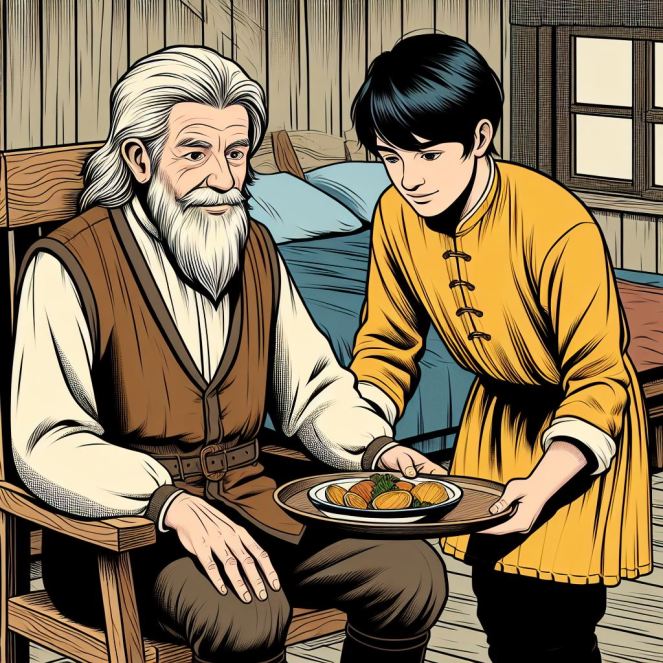
One day, Omar was inspecting the markets. During his tour, he saw an old blind beggar. Omar approached the man and asked, “Why is a man in your condition begging?” The man said, “I’m an old Jew, and I have no one to look after me.” Omar replied, “We wrong you if we benefit from your youth and forsake you in your older days.” He took the man to the Muslims’ treasury. He ordered the treasury keeper to set a suitable salary for the old Jew. He stipulated that a servant should be hired to serve him. The servant’s wage was to be paid by Muslims. He then generalized his orders to include all sick old people who have no caretakers.
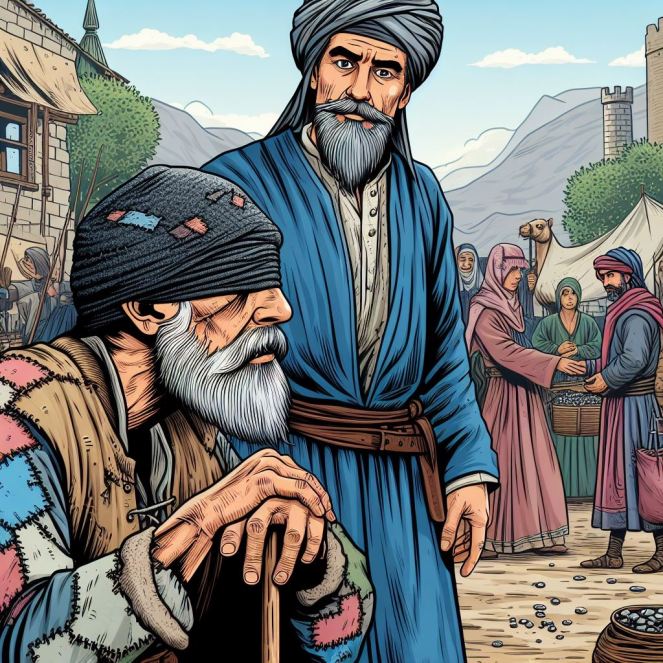
That was the first pension ever placed in mankind’s history. It was set by a Muslim Caliph for an old Jew in the 7th century. A just ruler is responsible for all his subjects, even those from different faiths.
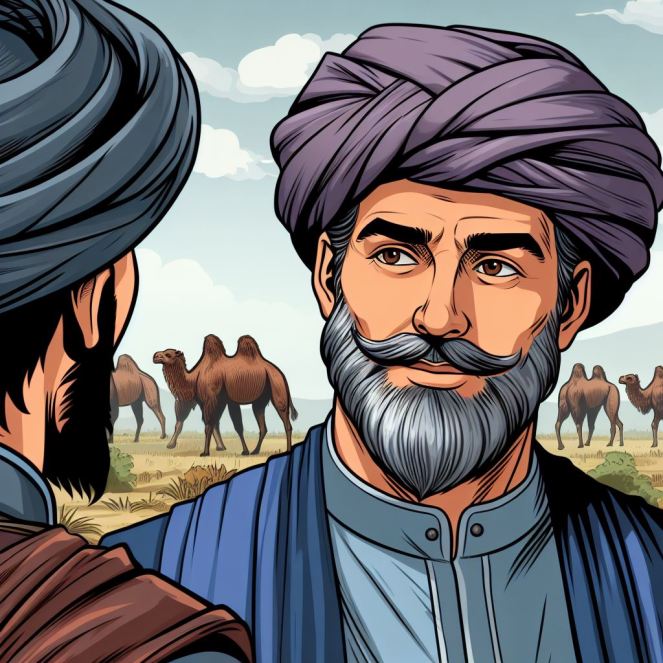
During Abu-Bakr’s reign, public pastures were developed. These pastures were open for all Muslim shepherds. It was an open pasture where they could graze their herds. In one of his tours, Omar visited the pastures. A herd of healthy camels caught his attention. “Who owns these camels?” he asked. The pasture keeper said, “Abdullah, your son, O prince.” On hearing the man’s reply, Omar was enraged. He said, “Summon him immediately.” The keeper called Abdullah who came hurriedly.


“How did these camels come to your possession?” Omar asked.
“I bought them young and weak. I fed and took care of them until they became healthy.” Abdullah replied.
“Where did you feed them?” Omar asked.
“In the public pastures like any other Muslim,” Abdullah replied.
“And of course, you were given an advantage over other shepherds. People would say, ‘Water the camels of our prince’s son. Feed the camels of our prince’s son.’ Isn’t this right?” Omar said. Abdullah didn’t utter a word. So Omar continued, “Go sell your herd. Take the original price you bought it with, and put the rest in the state’s treasury.”
Just rulers must not use their position to achieve any personal gain. They must not allow their kin or friends to benefit from their relationship. They should always be fair and treat all people equally. That is the doorway to a stable community and prosperity.
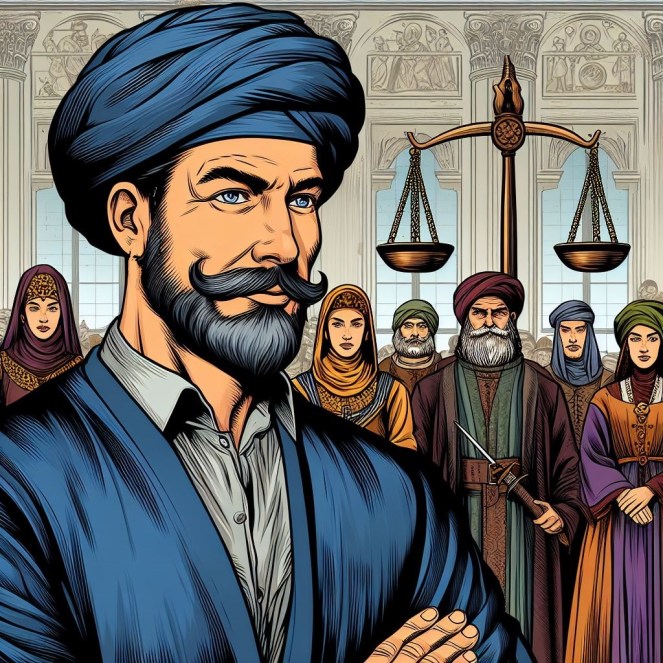
One Friday, Omar ascended the pulpit to give the sermon. “Listen carefully, may Allah’s mercy shower you,” he said. A companion named Salmaan got up and said, “We should not listen to you.” Omar asked the pious companion, “Why Salmaan?” Salmaan said, “You distributed the new fabric, for every male one length. Yet, you’re wearing two lengths. Where is the justice in that?” Omar looked around and asked, “Where is my son, Abdullah?” Abdullah got up. He was wearing his old weary garment. Omar pointed at him and said, “I’m wearing two lengths of fabric. One is mine. The other is my son’s. He gave it to me because I’m a big man. I washed my old garment this morning, so I had to borrow Abdullah’s share. I need two lengths of fabric to cover up.” on hearing that, Salmaan said, “Now, we listen and obey.”
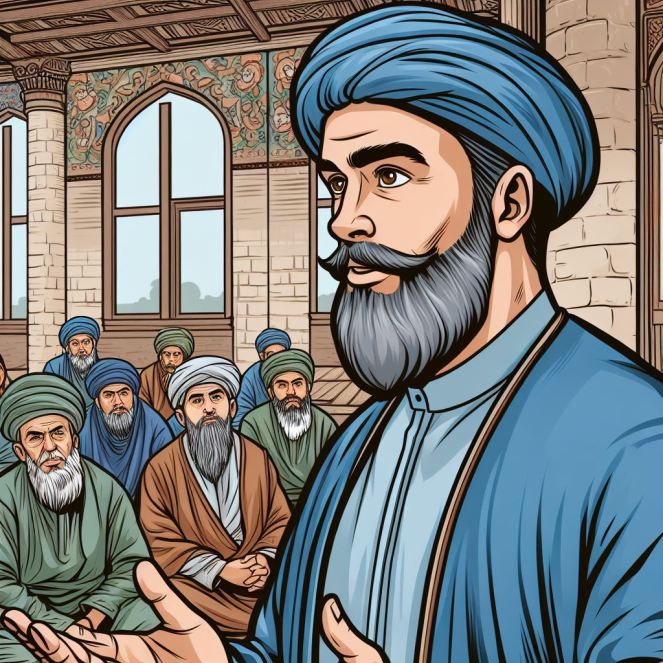
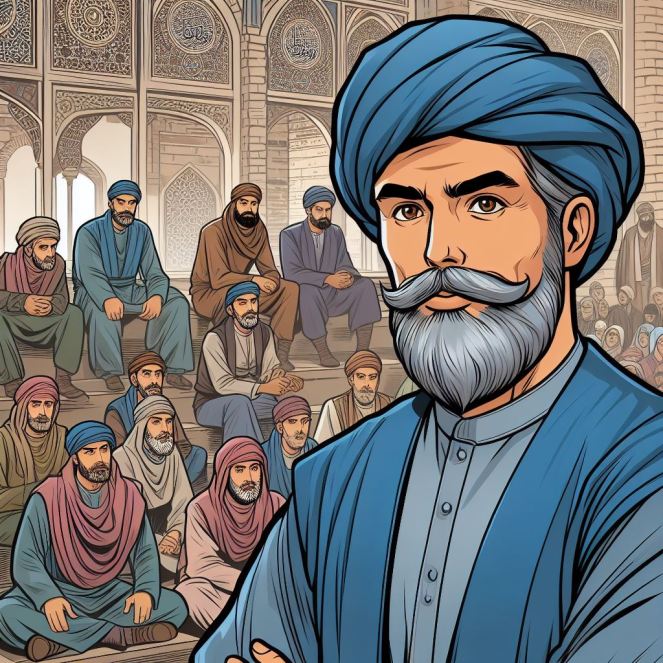
For the prophet’s companions, justice was a condition for obedience. An unjust gesture was not tolerated. An unfair order was disregarded. Ill-treatment of any kind was despised. The companions lived by a code: Allah enjoins justice, fairness, and good treatment of all creatures. As such, there is no obedience for him who does not obey Allah.
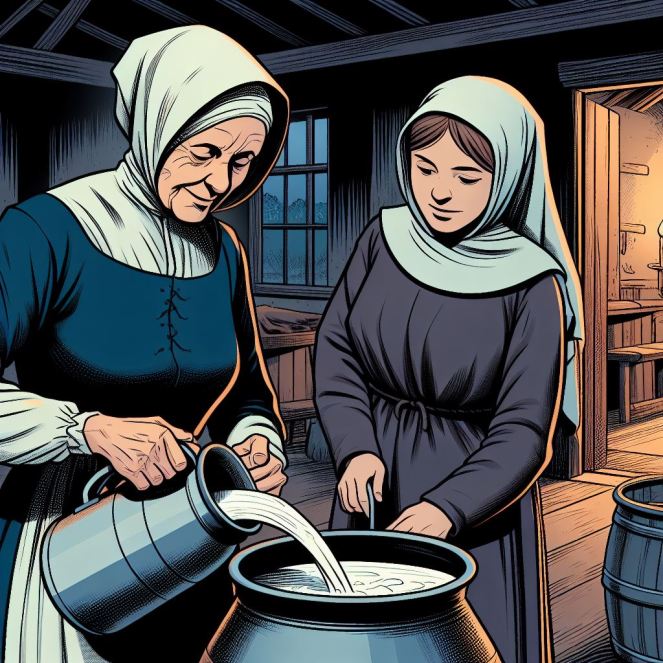
Omar used to go out on night patrols. He would walk miles around the city to make sure his subjects were safe and sound. As he passed by a house one night, he heard a woman ordering her daughter to mix milk with water. Mixing milk with water and selling it is cheating. Omar criminalized it during his reign. When he heard the woman’s words, he stopped. He wanted to know what the woman was up to.

But then, her Daughter said, “Didn’t Omar prohibit milk sellers from doing that, mother?” The woman answered, “He did, but Omar cannot see us here.” Her daughter then replied, “It isn’t right to obey him in public and disobey him in secret. O mother, Omar may not be able to see us, but surely, Allah does.”
On hearing the girl’s response, Omar ordered his assistant to mark the house and inquire about its residents in the morning. The next day, the assistant told Omar that an old woman lived in that house with her single daughter. Omar summoned his sons and asked them, “Which one of you wishes to get married?” His son, Assem said, “I do father.”
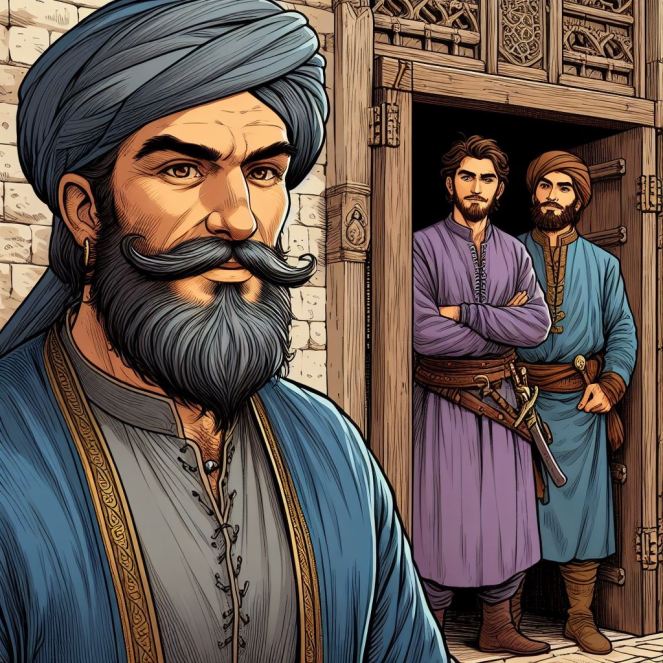
Omar ordered his assistant to take them to the milk seller’s house. When they arrived, he knocked on the door. When the woman opened and recognized him, she panicked. He calmed her down and asked her to call her daughter out.

When the girl came, Omar brought forth Assem and said, “This is my son. Look at one another. If you’re satisfied with what you see, I will wed you.” The girl smiled shyly and Assem nodded to his father. “So be it,” Omar said.

Assem and the pious girl got married. They gave birth to two daughters. One of their daughters married an Umayyed prince when she grew up. She gave birth to a boy and named him ‘Omar’ after his grandfather. That boy grew up to become Omar Ibn Abdul-Aziz, the just caliph. The boy who fulfilled his grandfather’s vision.

Evildoers fear just rulers. If Omar weren’t a just ruler, people wouldn’t have obeyed him. Meanwhile, Satan fails to seduce pious people. That’s why he failed to seduce the milk seller’s daughter. Finally, Allah rewards the pious with what they could never imagine. The poor pious girl married a caliph’s son. Her daughter married a prince. And her grandson became one of the most famous rulers in history. No human plan could have worked this out. Allah’s plan is most wise and best built.

Sweet dreams little ones. May Allah’s plan for you be better than what I could ever imagine. Amen.
Omar Ibn Al-Khattab, The Prince of Believers – Part VI.
Englished and Recomposed for 5th graders by Ehab Shawky
Copyright © Ehab Shawky, 2024.
All rights reserved.
Discover more from Islamic Methodologies Made Easy
Subscribe to get the latest posts sent to your email.
 Islamic Methodologies Made Easy