Prophet Muhammad once said, “No genius will come with greater performance than Omar.” He was referring covertly to Omar’s future caliphate. Omar never took the prophet’s words as a permission to grow arrogant. He took them as an order to always be just, make victorious what’s right, and fight falsehood. Omar was 53 years old when he became the caliph. Muslims had mixed feelings about him. Some feared his strong harsh nature. Others believed he was the best man for the job. The prophet taught Muslims that emirate is a huge responsibility. That was how Omar treated it. His steps as the caliph were remarkable. They could form a textbook for politicians through all ages.

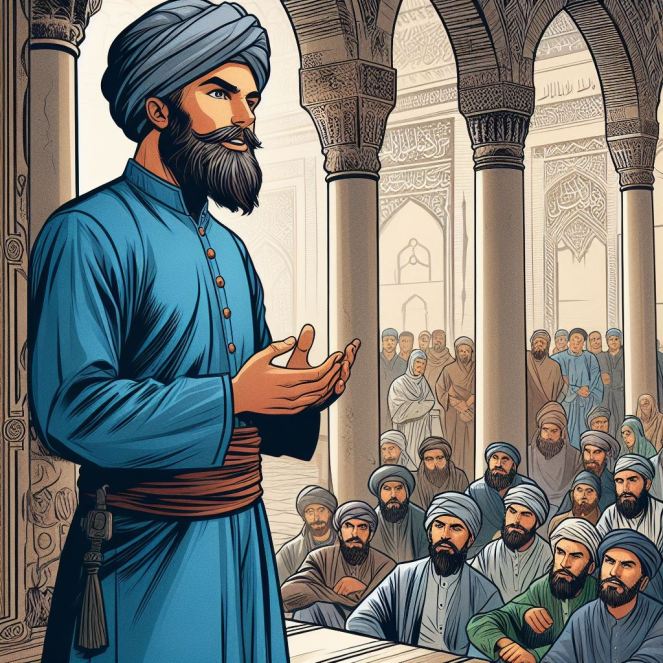
On his first day, Omar called upon all people to gather at the prophet’s mosque. He ascended the pulpit but stopped two steps before the top. When his son asked him about that, Omar said,
“I should not stand where the prophet or Abu-Bakr stood. I’m a lesser man than them both.”
It was Omar’s first time to ascend the prophet’s pulpit. Such a great honor, but a greater burden. He looked at the crowds and then started speaking. He said, “O people, I have been troubled with your responsibility. So have you been troubled with my emirate. Whoever lives in our city, I vow to take care of him myself. As for those who live faraway, I vow to instate truthful faithful deputies to take care of them. If my deputies do well, I shall treat them accordingly. If they deviate from the righteous path, I will punish them. For the public treasury, I’m like an orphan caretaker. If I waive my wage, I have preserved my honor. If I’m in need, I vow to take what’s lawful. I will do my best to increase your incomes. I will never take from your earnings except what’s lawful. If I do, I vow to spend it on what’s beneficial. I vow never to endanger your safety. As for the soldiers at the borders, I vow to take care of their families until they return. Some of you fear me and say that I am a harsh man. Know that my harshness has been weakened except on those who commit illegal acts. So fear Allah and abstain from illegal acts. Promote what’s right, forbid what’s bad, and advise me truthfully. O people, learn the Qur’an and follow its teachings so that you may prosper. Prepare for the judgment day. It will surely be a hard day. Indeed, if non-Arabs come on that day with good deeds, and we come empty-handed, they will be worthier of Muhammad than us. Weigh your deeds before Allah weighs them. May Allah forgive us all and treat us mercifully.” This short sermon was Omar’s code of conduct as a Caliph. It was the path he never deviated from.
Omar’s first deed was organizing the state’s administration. He chose his deputies and dispatched them to their cities. He established a postal and a judicial system for the whole region. The postal system facilitated the means of communication. The judicial system preserved the social stability. Omar chose the judges from among the most knowledgeable companions. He renewed the protection pacts Muslims had granted non-Muslims living in Arabia. He sent similar pacts to the people living in all freed countries. Arabs were at war with the Roman and Persian empires. They were freeing the region’s countries from their enslavement. Omar instated new army generals and sent reinforcements to the battlefields. He would sometimes place the battle plan himself. He gave orders that Muslim soldiers should not jam the countries they free. Accordingly, new cities were built in the wastelands of these countries. Omar placed a construction code for all new cities:
- They must be close to water sources.
- There should be no sea or river running between them and Arabia.
- Every city must have a mosque and a modest emirate house.
- The main streets must be 40 cubits wide. Side streets must be 30-20 cubits wide. Back alleys must at least be 7 cubits wide. (1 cubit = 0.5 Mt.)
- Houses should be constructed from the available materials. They should all have simple designs.
- A canal bringing drinkable water must be dug to every city.
- Bridges crossing this canal and close rivers must be established.


Omar sent these terms to all his deputies. Based upon them, Basra, Kufa, and Mosul were established in Iraq. So was Al-Fostat and Al-Qayrawan in North Africa. Omar created records including every citizen’s name, job, city, and annual share from the state’s income. Every year, these shares were distributed on the people.
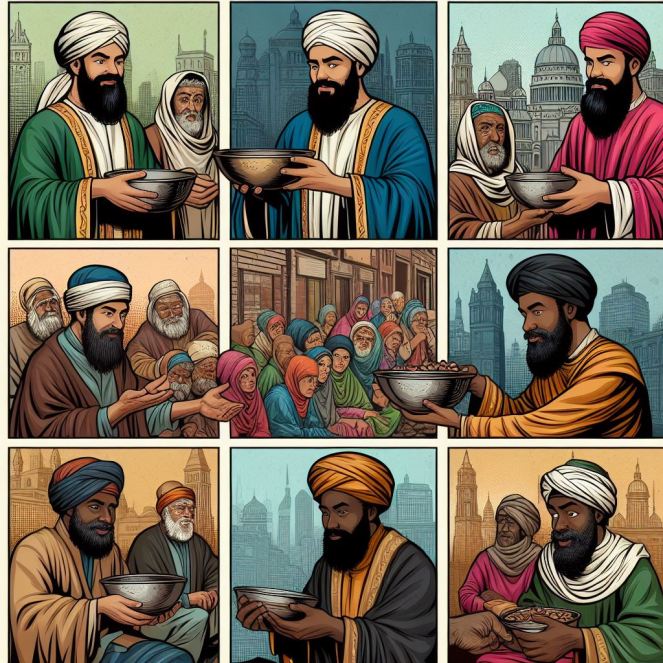
Omar chose clever faithful deputies. Their task was to establish justice and serve the people. As such, they all took a two termed oath. First, never to treat any citizen unjustly. Second, never to use their position for any personal gain. Omar then developed a supervision system. Its task was to oversee his deputies’ performance and report to him. Any deputy who didn’t receive complainers himself was replaced. Any deputy who kept his door shut during the day was replaced. If an increase was noticed in a deputy’s wealth, it was confiscated. If a citizen came complaining from any city, its deputy was summoned for interrogation, and justice was served. That was Omar’s code for governorship.
One day, traders from Syria arrived at Madinah. When Omar saw them, he asked, “How is my deputy doing?” They said, “He’s not bad. We only wish he hadn’t built that two-floored house and stayed up all day.”
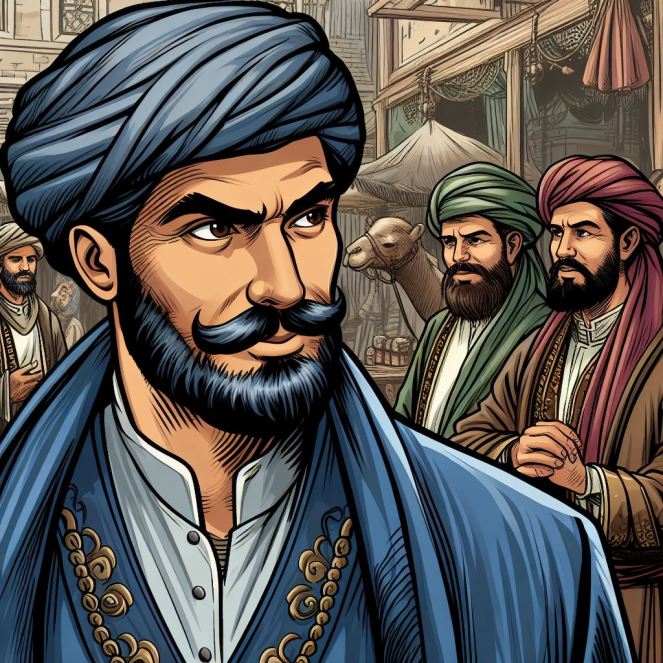
On hearing their response, Omar wrote a message to his supervisor. It said, “Go to my deputy in Syria. Burn down his door, and order him to come to me.”
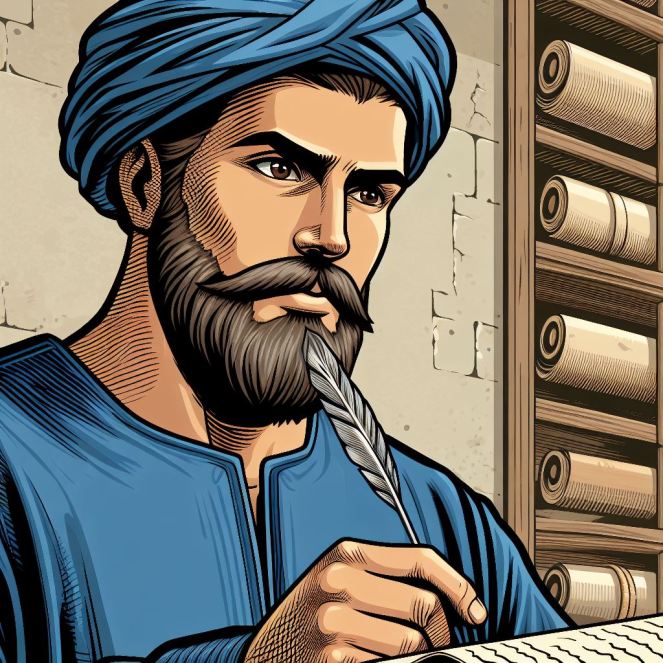
When the supervisor did that, the deputy didn’t utter a word. He mounted his horse and traveled to Madinah. When he arrived, he asked for permission to meet the caliph. Omar ordered his assistant to tell him to wait. The deputy waited the whole day but didn’t meet Omar. On the second and third days, the same thing happened. On the fourth day, Omar came out and ordered that deputy to follow him. He took the man to the camels’ barn. “Tuck up your sleeves and water the camels,” Omar ordered him. The man followed the order. He worked all day long. When he was done, Omar looked at his sweaty face and said, “When was the last time you worked like this?” the man said, “It was a long time ago, my prince.” Omar asked angrily, “Is this why you built that two-floored house and stayed up all day? How dare you look down upon the people you’re supposed to serve—the widows and the orphans?” The man nodded in remorse and didn’t respond. Omar then said, “Go back to your post and never do this again.”


On a trip to Syria, Omar arrived at Homs. Some of its people came to welcome him. Omar asked, “How is my deputy doing?” They complained to Omar from the man. They said, “He receives no one before sunrise. He receives no one during the night. A day per month, he closes his door and meets no one. Sometimes he goes numb and faints.”
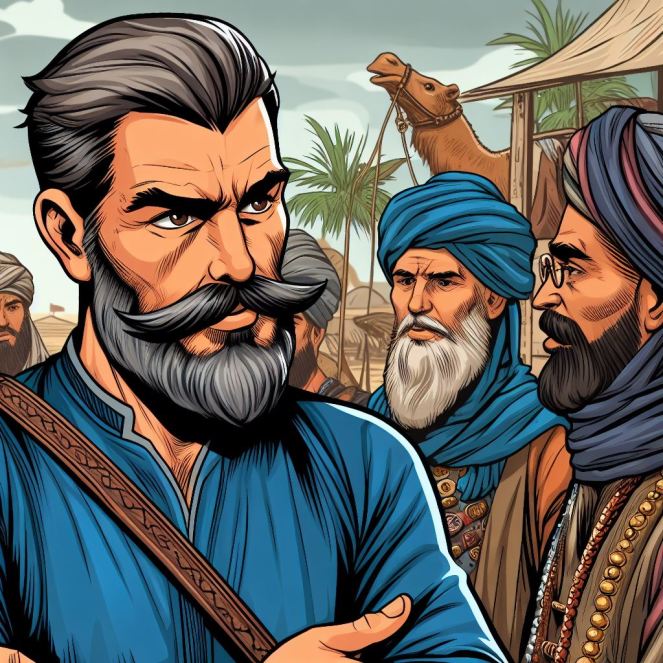
On hearing their complaints, Omar summoned his deputy and confronted him. The deputy started defending himself. He said, “I hate to disclose my personal secrets. However, I must do so to respond to your complaints. I have no servants, so I have to bake my family’s bread before I leave. That’s why I receive no one before sunrise. I have dedicated the rest of the day to serving the people. As for the night, I have dedicated it to praying and worshipping my lord. That’s why I receive no one during the night. I have no clothes but those you see me wearing. I wash them once a month. On that day, I wait for them to dry. Thereafter, I get dressed and receive those who have complaints in the afternoon. As for my seizures: before I embraced Islam, I witnessed the execution of Khobaib Al-Ansary. The idolaters tortured him severely. Before the execution, they taunted him saying, ‘Wouldn’t you like it if Muhammad were in your place?’ But Khobaib said, ‘I wouldn’t even like to be playing with my children and a thorn pricks Muhammad’s fingertip.’ The last words he uttered were in Prophet Muhammad’s love. I watched as they executed him and didn’t budge. Sometimes when I remember that day, I panic and choke. How could such sin be forgiven?”


On hearing the deputy’s response, Omar said, “Thank you, Allah, for guiding me to instate this man as my deputy.” After a few months, Omar dispatched a supervisor to this city. The supervisor investigated and sent Omar a report. He informed him that his deputy was among the poorest in the city. Omar ordered his assistant to grant that deputy a bonus to help him. Nonetheless, the deputy distributed it to the poor and the needy. He refused to take a single dirham from it.


Omar instated Omair Ibn Sa‘d as his deputy in a city in Syria. A year passed during which Omar received no word from Omair. Doubt crept into his heart. He thought Omair was doing something wrong. Why wouldn’t he write? He must have something to hide, Omar thought. He sent Omair a message. It said, “Travel to me with no delay. Bring with you the Muslims’ alms.” When Omair received the message, he put a water skin and some food in a bag and left. Weeks later, he arrived at Omar’s door. He was pale and dusty. His hair had grown long. His clothes were weary. On seeing how he looked, Omar asked, “What’s wrong with you?”


“Nothing. Can’t you see that I’m healthy and pure? I’ve come pulling life by its horns,” Omair replied.
“What did you bring with you?” Omar asked. He thought Omair’s last sentence was a reference to the alms.
Omair said, “I have my bag. It includes some food and water. I have a bowl. In it, I eat, drink, wash my clothes, and perform ablution. I have my staff. I lean on it and defend myself if an enemy attacks.”
Omar asked in shock, “Did you walk all the way here?”
Omair said, “Yes.”
Omar asked, “Were there no one to lend you a ride?”
Omair replied, “No one offered, and I never asked.”
Omar said, “Your people have wronged you. Tell me, what did you do in your city? Where is the alms?”
Omair said, “When I arrived at the city, I gathered the most pious among its people. I ordered them to collect the alms and bring it to me. When I received it, I distributed it to the poor and needy. If there remained anything, I would have brought it to you.”
Omar asked, “So you have brought nothing?”
Omair replied, “No.”
Omar then said to his assistant, “Renew Omair’s term.”
Omair interrupted, “Don’t. I refuse to work for you or anyone else ever again. I ask for permission to go home.”
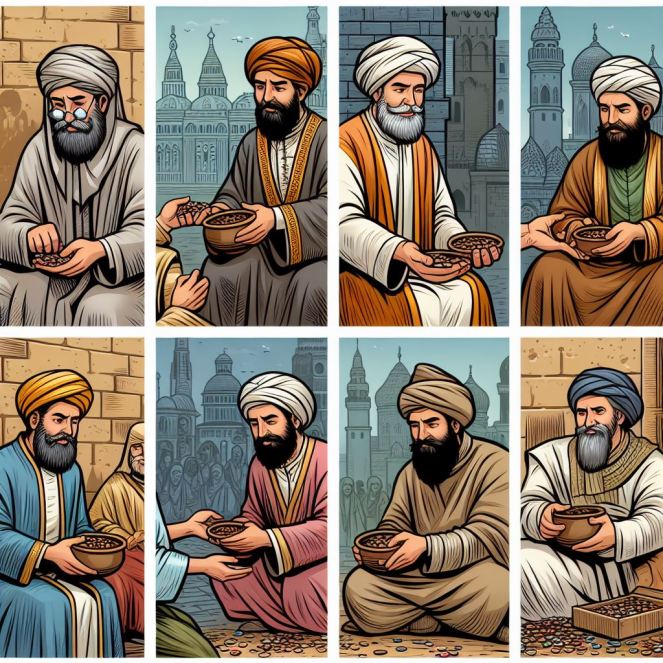
Omar gave him permission to leave. Omair’s home was miles away from Madinah. A few days later, Omar summoned one of his supervisors. He gave him a bag and said, “These are 100 dinars. Take them and go to Omair. Pretend to be a guest and stay with him for a while. If any traces of wealth appear on him, report back to me. If you find him leading a hard life, give him the bag and then return.”
The supervisor traveled to where Omair lived. He found him sitting outside stitching his shirt. He approached and asked for permission to rest at his house.
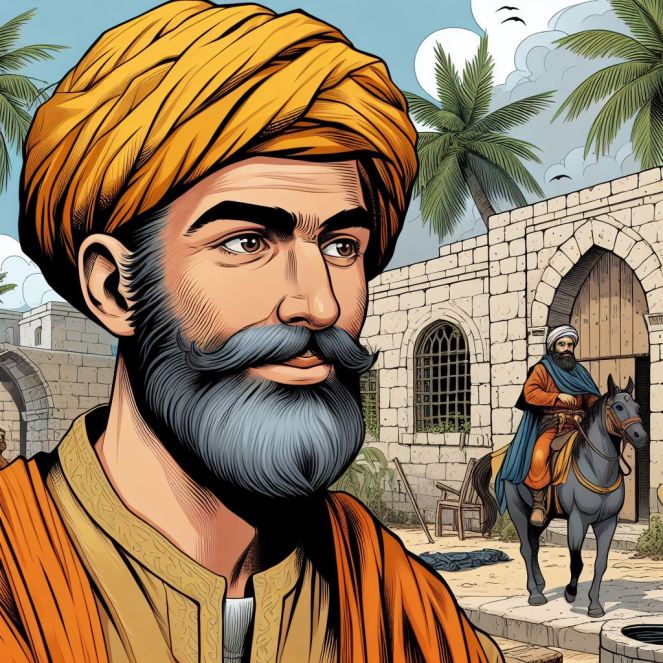
“Sure, mount down. May Allah’s mercy shower you,” Omair replied. He entertained the guest for three days. The man noticed that Omair had nothing but a weight of barley. They baked it for him and ate the leftovers. On the third day, Omair and his family were exhausted. He said to the man, “We have entertained you for three days. Indeed we are exhausted. If it’s no trouble, will you resume your journey?”
The man brought the bag Omar gave him and handed it over to Omair.
“What is this?” Omair asked.
The supervisor told him who he was and explained his mission. Omair refused the money but his wife said, “If you don’t need it, distribute it to those who do.” So Omair took the bag and distributed the money to the poor and the martyrs’ sons and daughters.


The supervisor awaited Omair’s return. He thought Omair would give him some dinars to help him on his trip back to Madinah. However, Omair returned with an empty bag. He said, “Deliver my greetings to our prince.”
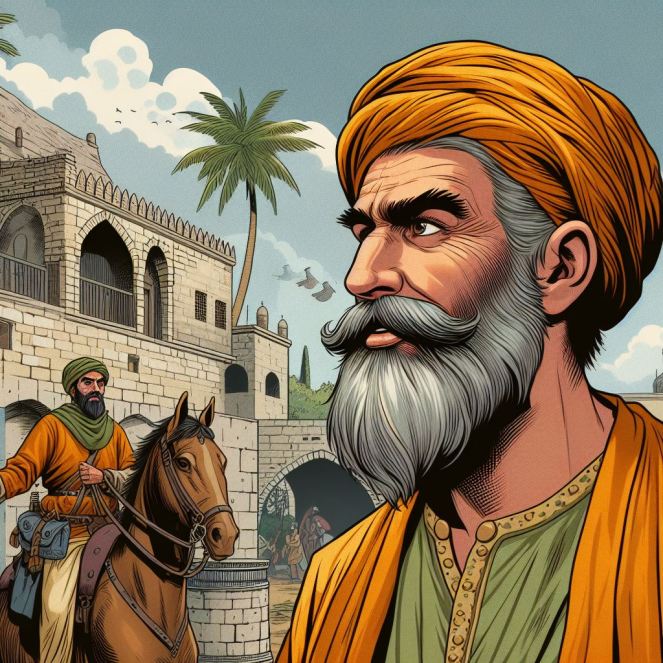
When the supervisor returned, Omar asked him, “What did you find out?” The man told Omar everything. “But what did he do with the dinars?” Omar asked. The man said, “I don’t know. When he returned, the bag was empty.”
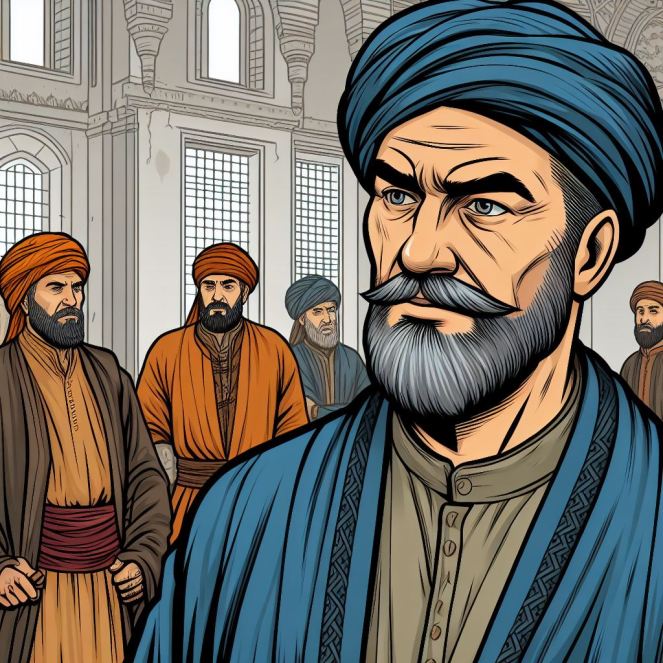
Omar sent a message to Omair summoning him to Madinah. When he arrived, Omar asked him, “What have you done with the money I sent you?”
Omair answered, “Why are you asking? What I did is up to me alone.”
Omar said, “I entreat you to speak.”
Omair said, “I sought their reward in the hereafter.”
On hearing this, Omar nodded in satisfaction and said, “May Allah’s mercy shower you.” He then ordered Omair a sack of food and two lengths of fabric.
“I don’t need the food. We have two bushels of barley at home. As for the fabric, I left my wife in rags.” He took the fabric and went home.
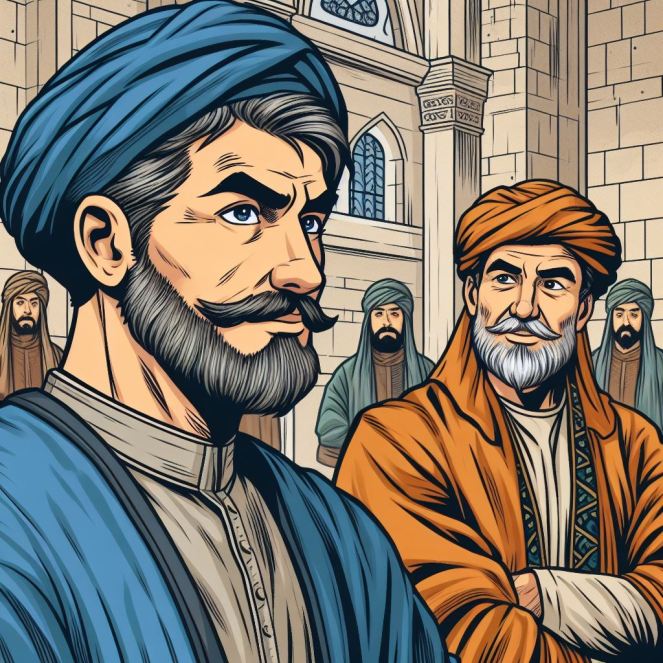
What else happened between Omar and his deputies? I will tell you more about them, but that’s enough for tonight. Know little ones that pious deputies are the secret of any successful governor. May Allah grant us strong clever governors; but above all, faithful sincere deputies. Amen.
Omar Ibn Al-Khattab, The Prince of Believers – Part IV.
Englished and Recomposed for 5th graders by Ehab Shawky
Copyright © Ehab Shawky, 2024.
All rights reserved.
Discover more from Islamic Methodologies Made Easy
Subscribe to get the latest posts sent to your email.
 Islamic Methodologies Made Easy