After Omar embraced Islam, his previous persecution of Muslims became his greatest guilt. How did I allow myself to do such atrocities? was a question he asked himself. As stated earlier, Omar’s main characteristic was sincerity. As such, he decided to take difficult measures to make victorious what’s right. He went to his uncle, Amr Ibn-Hesham, and knocked on the door. That man was one of the tribe’s dignitaries and a mighty persecutor of Muslims. When Amr opened, Omar said, “Haven’t you learned?” His uncle asked, “Learned what, nephew?” Omar said, “I have embraced Islam.” His uncle was enraged and tried to talk him out of it. Nonetheless, Omar refused and left.


He then went to the sacred mosque and declared to all people that he had embraced Islam. Many idolaters attacked him like they did with other Muslims. Omar stood fast. He fought them back with all his strength striking down those who dared attack him. More and more people gathered around, among them was his mighty uncle. Amr shouted, “Stop. I have granted Omar my protection.” The idolaters backed away in respect to their leader. However, Omar didn’t accept this and said to his uncle, “I refuse your protection.” Of course, that’s what a sincere person would do. Why would he receive any special treatment aside from the others? When he said that, the idolaters attacked him with more anger. Their trials to break Omar were in vain. He continued to fight them back until they lost all hope to break his will. What must have struck them the most was one question: What kind of faith would urge a man to throw himself into such danger?


One of Prophet Muhammad’s companions saw this incident. Years later, he reported it to his students then said, “We [Muslims] have been living with dignity ever since that day.” That companion’s name was Abdullah Ibn Mas‘ud. Though one of the bravest companions himself, that’s how he described Omar’s reversion to Islam. Ibn Mas‘ud was the first man to recite the Qur’an at the Sacred Mosque. When the idolaters attacked him and beat him up, he continued to recite the Qur’an until he blacked out. One would wonder, what kind of men would act so bravely and why? I guess the secret will always be in their faith. May Allah grant us the ability to follow their example and live with dignity as they did, Amen.


After the previous incident, Omar returned to the prophet and his companions. He said, “O prophet, aren’t we following the right path?” The prophet answered, “Yes, we are.” Omar then said, “Then why should we be the ones to hide? By Allah, let’s all go out and pray at the mosque openly.” Knowing Omar’s sincerity, the prophet agreed. He organized his companions in two ranks. Omar led one, and Hamza—the prophet’s uncle—led the other. Forty men was their approximate number. As the prophet led them towards the sacred mosque, people stood in awe. How could these few men act so boldly? Although the idolaters were many, no one dared to stop them. On that day, Prophet Muhammad nicknamed Omar, “Al-Farouk.” A word that means, ‘One who distinguishes righteousness from falsehood.’
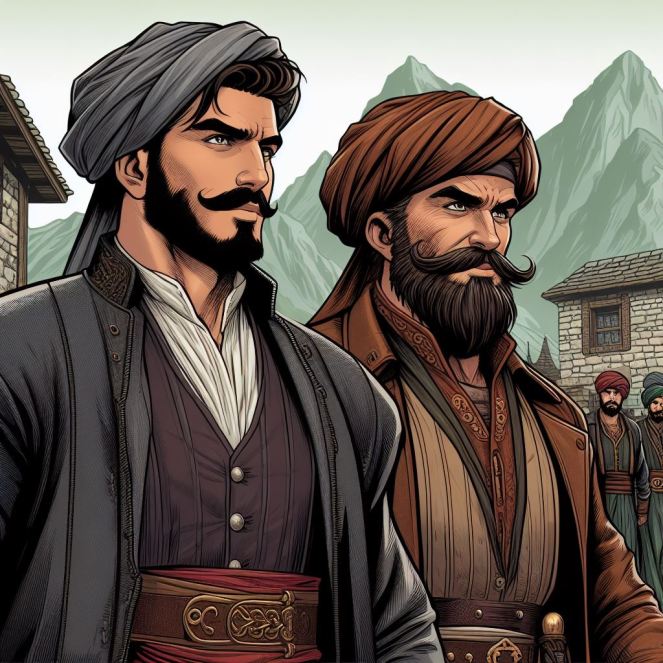
From that day on, Omar never left the prophet’s side. He became one of the prophet’s closest companions. The idolaters sensed huge danger. Hamza and Omar’s reversion to Islam took place in the same week. That was a grand blow to their power. Hence, they intensified their persecution campaign against the weak Muslims. Starvation, torture, siege, execution, etc., were part of their campaign.


The prophet and his companions tried their best to help those who were weak. One example is companion Abu-Bakr, the prophet’s closest friend. He used to buy Muslim slaves, and then emancipate them. Others smuggled water and food secretly to the Muslims besieged by the idolaters. Despite the ongoing events, Prophet Muhammad never stopped preaching his message. He continued to deliver its teachings to others.


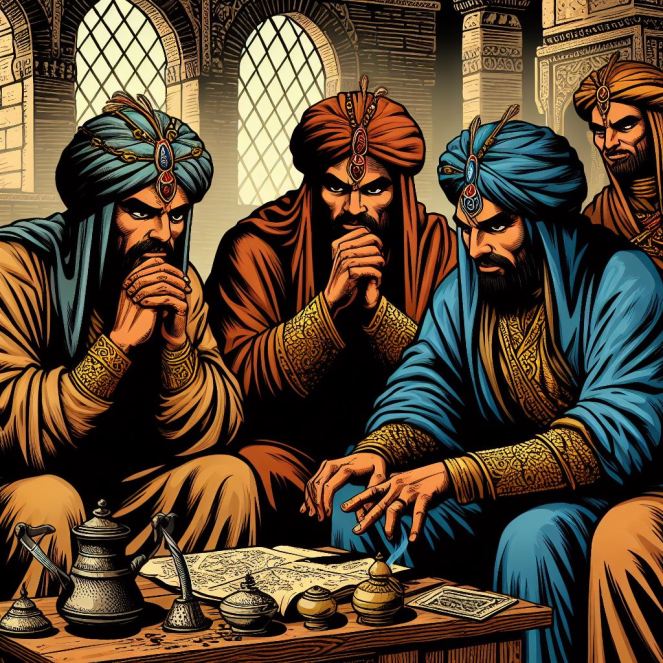
The idolaters were frustrated that the Muslims’ spirit didn’t break. Not one Muslim forsook his faith. Their leaders convened and reached a decision. They decided to kill Prophet Muhammad to stop Islam from spreading. Allah revealed to the prophet their scheme and ordered him to immigrate to Madinah.
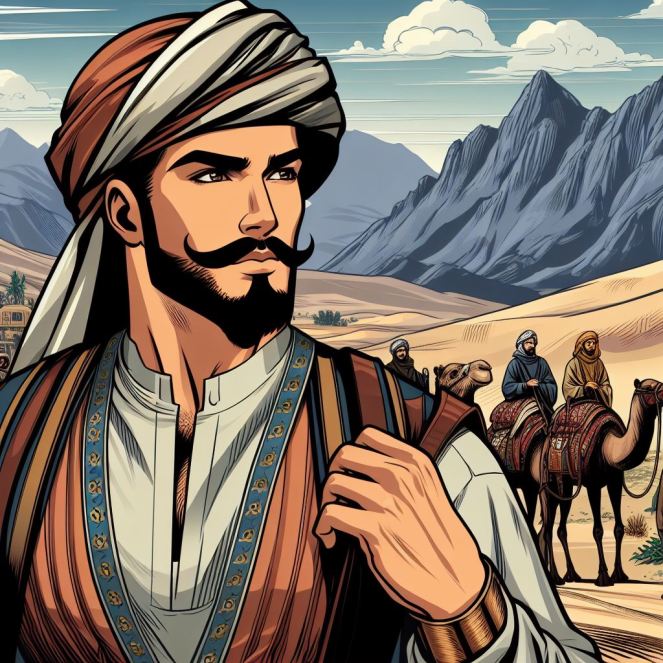
Madinah was a city 500 km north of Makkah where the prophet lived. At that time, its people had mostly embraced Islam and sworn allegiance to the prophet. As the leader of his people, Prophet Muhammad ordered all Muslims to immigrate to Madinah. He wanted to make sure that all his followers were safe before he would immigrate himself. Muslims started to immigrate secretly. The way was too long. Back then it took two weeks to travel 500 km. The idolaters chased after the Muslims trying to either kill them or bring them back to Makkah. They knew that this collective immigration would destroy their image all over Arabia. The risk was sky-high. Muslims were escaping with their lives leaving behind everything.


Nonetheless, one Muslim tied his sword around his waist, took his she-goat and walked over to the sacred mosque. He prayed and then called upon the attendees saying, “O people, I have decided to immigrate to Madinah. Whosoever wishes to lose his life, let him follow me or try to stop me.” That fearless man was Omar. On hearing his declaration, twenty weak Muslims, who were too afraid to leave, accompanied him. He took them safely to Madinah. A true soldier of faith, that’s what Omar was.
After all Muslims arrived at Madinah safely, it was time for the prophet’s immigration. Muslims awaited his arrival impatiently. The idolaters insisted on killing the prophet. Nonetheless, Allah protected him against their plans. He arrived safely after a trip full of adventures. On that day, Muslims rejoiced and celebrated the prophet’s arrival. That day marks the true dawn of Islam. Muslims began establishing a state built upon equality, brotherhood, and justice. The prophet began setting the rules guiding all aspects of life as revealed to him. This continued for 10 years during which he prepared Muslims to carry forth his message. Omar was among his most notable students.


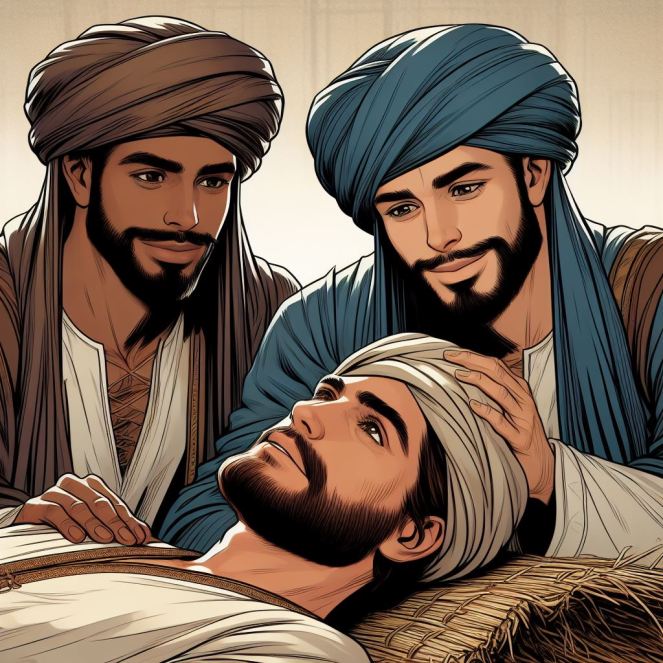
One day, Omar and some of the companions entered the prophet’s house. He was lying down covered with a very rough sheet. Under his head, there was a pillow stuffed with Bast. Omar noticed that the sheet had left marks on the prophet’s skin. Ibn Mas‘ud said, “O prophet, if you allow us, we can spread something softer for you.” The prophet said, “Who am I in this worldly life? My example is like that of a rider traveling on a hot summer day. He took shelter in the shadow of a tree for an hour, and then he left and went on his way.” A tear fell silently from Omar’s eye out of pity. The prophet asked him, “Why are you crying, Omar?” Omar answered, “I couldn’t help it, O prophet. I know how tyrants like Caesar and Chosroes live luxuriously, and now, I see you live like this.” So the prophet said, “Wouldn’t you be satisfied if they get the pleasures of this life, and we get those of the hereafter?” Omar said, “I would indeed.” The prophet then said, “And so it shall come to be.”
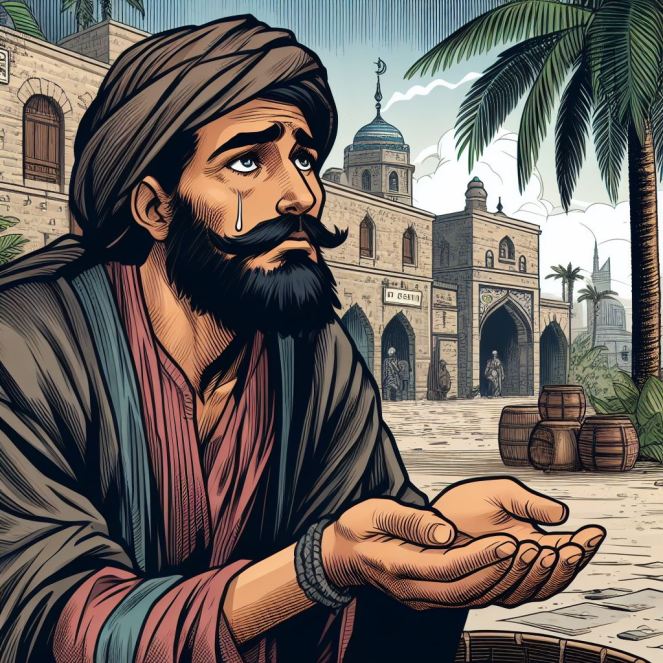
Once, a poor man came to ask the prophet for alms. These were hard times and Muslims were destitute. The prophet said, “I have nothing remaining. Go and buy whatever you need on my account. When money or something to trade with comes to me, I will fulfil the debt.” On hearing that, Omar said out of pity, “Allah didn’t burden you with what you can’t bear, O prophet.” The prophet didn’t like what Omar said. One of the companions noticed this, he said, “O prophet, spend in charity and don’t fear diminution.” The prophet smiled and glad tidings filled his face; he said, “That is what I was ordered to do. Every day, two angels call out in the sky. One of them says, ‘O Allah, give recompense to him who spends in charity.’ The other one says, ‘O Allah, give decay to him who is tightfisted.’ Know the following: Charity never decrease your wealth. Allah enriches those who are forgiving with glory. No one ever acts humbly except that Allah honours him.”
The more Omar and his companions learned, the more they loved Prophet Muhammad. Their attachment to him became stronger than a father-son bond, much stronger.
Zayd Ibn Sa‘yah was a Jewish rabbi who lived in Madinah. Through his studies, he knew that there was a prophet promised in the scriptures. This prophet would appear in Arabia. He would have two special moral characters. He reported his story as follows:

“I recognized all physical signs of the awaited messenger in Prophet Muhammad when I saw him. Two moral characters were yet to prove my deduction. First, his patience precedes his anger. Second, treating him ignominiously couldn’t but increase his patience. To test him, I went over to him and said, ‘O Muhammad, would you sell me the dates of your companions when they are reaped?’ He agreed. So I gave him the price in advance, and we appointed the time in which I shall receive the dates.
When this date approached, I saw the prophet following a funeral with his companions. I approached him, pulled him by his garment harshly and shouted, ‘Hey Muhammad, won’t you give me what’s mine? I know your people. They have a reputation for procrastination.’
On seeing that, Omar Ibn Al-Khattab glared at me. He grabbed me and said, ‘O enemy of Allah, how dare you do what I saw and say what I heard? If I didn’t fear the prophet’s blame, I would have struck you down with my sword.’
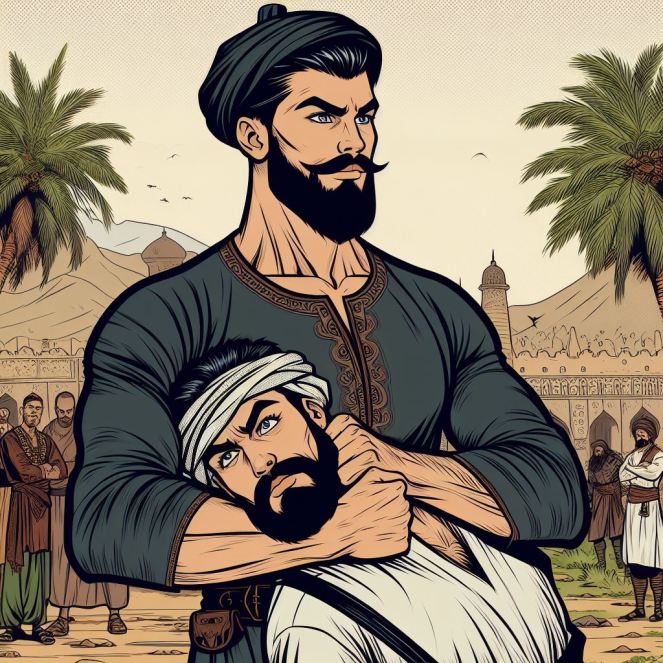
The prophet looked at Omar and said, ‘Me and him needed what’s different from that Omar. You should have ordered me to fulfil my promise, and ordered him to be lenient. Go with him, Omar. Fulfill his debt. Give him an extra twenty weights of dates. It’s to recompense for frightening him the way you did.’
Omar obeyed the prophet. He took me with him, gave me my share and added the extra twenty weights. After that, he asked me, ‘What was your intention when you acted as you did?’
I answered him, ‘I knew from our scriptures that a prophet was to come in Arabia. I recognized his described features in Muhammad’s face when I saw him. However, I was unable to recognize two moral characters from his appearance. His patience always comes before his anger, and treating him poorly only makes his patience grow. Now I have recognized them.
As such, I take you as my witness, Omar, I testify that there is no God but Allah and that Muhammad is His messenger. I also hold you as my witness that half of my wealth is a dole for Muhammad’s poor followers.’ ”
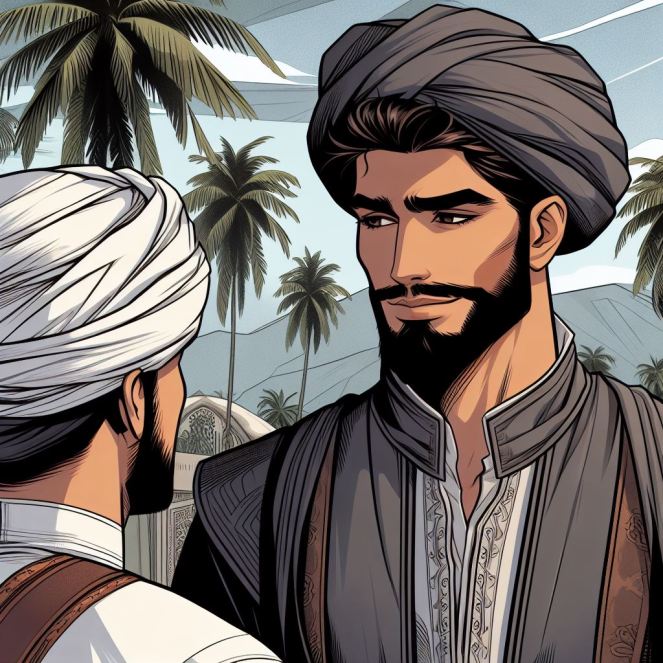
More and more people began to learn about Islam. Many travelled to Madinah and embraced it between the prophet’s hands. Of course, the surrounding idolater tribes didn’t like that. They plotted to destroy Madinah. Many attacks were carried out by allied idolater armies. The prophet was targeted in several assassination attempts. Nonetheless, through all the dangers, the prophet led Muslims to one victory after another. Finally, Arabs accepted Islam. They embraced it in magnitudes and sworn allegiance to the prophet. Then there came the day when the prophet fell ill. His health deteriorated, and after a few days, he passed away. That was the hardest day ever for Omar and all companions. The grief that struck them was overwhelming. Losing the prophet was like losing one’s father and best friend. It was like losing a lifetime neighbor, companion, mentor, protector, and paragon, all at once.


Omar refused to believe that the prophet had passed. He shouted at the people gathering at the prophet’s door, “Whoever says Muhammad has died is a liar. I will strike down anyone who repeats this heresy. The prophet is alive, he must be. He just left with the archangel for a while but he’ll be back.” When Abu-Bakr heard Omar’s words, he raised his voice saying, “Whoever worshipped Muhammad, then know that Muhammad has died. But whoever worships Allah; verily, Allah is everlasting, He never dies.” Then Abu-Bakr recited the following verse, “Muhammad is but a messenger following a trail of messengers. If it happens then that he dies or is killed, will you forsake the righteous path? Whoever forsakes the righteous path, he shall never harm Allah’s [message]. Allah will reward those who are grateful.” On hearing that, Omar fell to the ground unable to hold on. He broke into tears and knew that the prophet had passed away.

The prophet’s death was a huge strike to all Muslims. Nonetheless, those whom he educated himself were soaked with faith and knowledge. Their grief didn’t hinder them from attending to their duties. Their persistence to complete what their mentor had started soared. Muslims chose Abu-Bakr to lead them, and Abu-Bakr chose Omar to be his vizier and counsellor. Tomorrow night, I shall tell you how bravely they faced all dangers after their mentor’s death. They never backed down or feared to make victorious what’s right. May their pure spirits fill your hearts, Amen.
Omar Ibn Al-Khattab, The Prince of Believers – Part II.
Englished and Recomposed for 5th graders by Ehab Shawky
Copyright © Ehab Shawky, 2024.
All rights reserved.
Discover more from Islamic Methodologies Made Easy
Subscribe to get the latest posts sent to your email.
 Islamic Methodologies Made Easy