Englished and Recomposed for 5th graders by Ehab Shawky
Tonight, I will tell you of a Caliph, a very just and righteous Caliph. He was a descendant of a very pious grandfather from his mother’s side. This great-grandfather of his had a vision during his life. He dreamed that a righteous just Caliph would come forth from his offspring. He would rule the lands and make amends for what his predecessors had corrupted. On his forehead, there will be a mark from an old wound.
Many years later, it happened that when our hero was a child playing with his cousins, a camel attacked him. Of course, the poor animal didn’t mean to hit Omar. It was a brief moment during which the camel made a random move because it was in pain. Feeling scared, Omar fell hitting his head. This resulted in a nasty gash that left a mark on his forehead. The mark resembled what the pious great-grandfather described. On seeing it, his mother felt that her son would be the one to fulfill her grandfather’s vision.
Almost three decades after this incident, there came the day when a tyrant Caliph was dying. Regretting his poor performance as a ruler, he willed to repent. As such, he decided to assign a just successor to the throne. He summoned his faithful consultants and asked them to choose a pious man for the position. If they reached consensus, he would declare that person as his heir. On hearing this, the grand vizier said, “Your cousin, Omar, is the most righteous man I know. Declare him as your successor, may Allah forgive you and join you with those who were virtuous.” On hearing those words, the dying Caliph smiled and said, “Your words met my desire, faithful friend. Omar is the one I wanted to choose. So be it.”
And so the Caliph passed away after assigning a righteous person as his heir. When the grand vizier declared the name of the new Caliph, people were thrilled. They all knew Omar and appreciated his piety and kindness. People started paying him homage and declaring him as their Caliph. Yet, Omar was sorrowful. He said, “Take back your oaths. I don’t want your caliphate. It’s a huge burden. I don’t want to carry it in front of my Creator on the judgment day.” On hearing this, the people refused to swear their allegiance to anyone but Omar. The grand vizier approached him and said, “Your burden will be greater if you don’t accept the people’s will. Don’t break their hearts and let them down.” When he seemed hesitant, the people carried him by force and declared him their Caliph.
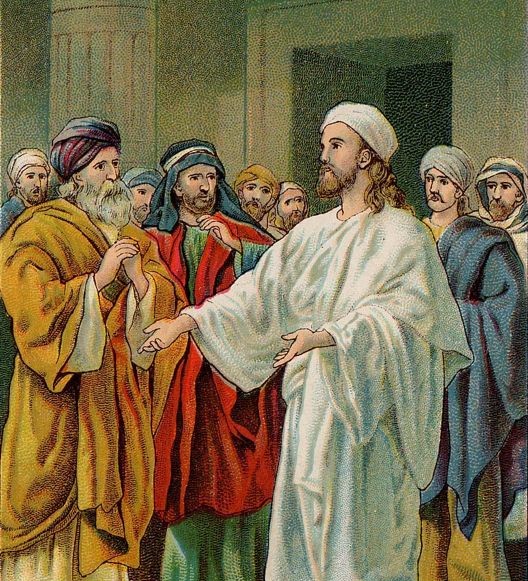
On his first day, Omar refused to enter the Caliphate palace. He even ordered his ministers to sell his estate and put the money in the public treasury. He asked about the poorest neighborhood and prepared a small house for his family. He spoke with his wife, Fatima, about the new circumstances at hand. He said, “I have been afflicted with what you see. If you wish, you can join your folks in their palaces; or else, you can live with me in that poor cottage till the end of my life.” The faithful wife responded, “How can you say that Omar, I will not leave you till death do us part.” He said, “Then you must submit your jewelry and ornaments to the public money household. I can’t allow you to own all these riches while some are poor and needy among my people.”
The faithful wife submitted her belongings like he did himself before. Omar then bought himself and each member of his family one costume from the cheapest in the market. He then distributed all their expensive clothes to the poor people. He refused to assign guards for himself or his family, not even at his house’s gate. He refused to ride a horse but chose for himself a mule; which was the cheapest ride of that time.
In the next few days, Omar ordered that the old assigned governors be relieved from their posts. Thereafter, he started choosing the new governors and his assistants. He chose a black slave to be his assistant and emancipated him. The man asked Omar about the reason for his choice. Omar said, “I saw you once praying in the desert alone, so I knew you were a faithful man who would never betray his trust. I want you to stick to my side wherever I go. If at any time or any place you see me giving an unjust verdict, pull me by my garment and scream in my face, ‘Fear Allah, Omar.’ ”
In that manner, Omar chose his deputies and instated the governors. After that, he started to make some economic reforms. He set for himself the lowest wage there was at that time. He then turned to the royal family—his kin. He confiscated the lands they had wrongfully taken during his predecessors’ reigns and returned their ownership to the state. Thereafter, he did the same with the so-called nobles. This intrigued enmity towards Omar, but he never feared anyone. All he cared about was the people’s welfare, and doing what was fair.
One night, Omar returned to his small house. When he entered, his children saluted him hiding their mouths with their hands. He asked his wife why they were doing this. She whispered, “We have no food but a few lentil soup and onions. They don’t want to disgust you with the smell of the onions they just ate.” Omar smiled, took his children in his arms, and kissed them one by one.
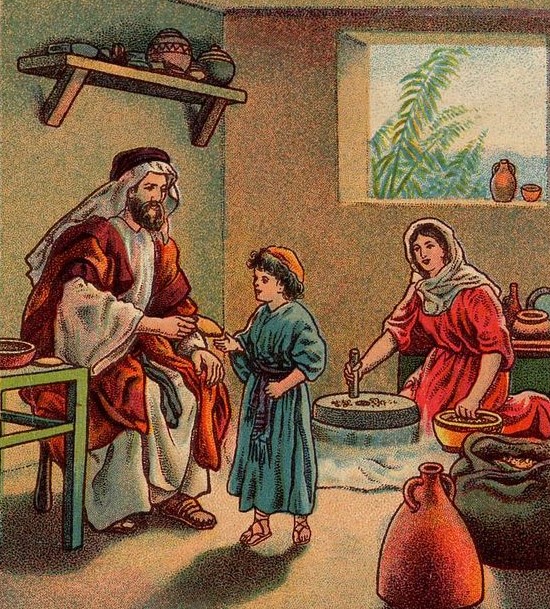
One feast day, it happened that his young daughter ran into the house crying. He asked her why she was crying and not playing with the children outside. She said, “All of them are wearing new clothes except me.” Feeling sorry for her, Omar went to the guardian of the public treasur and asked for part of his coming salary. The guardian said, “I can give it to you if you can guarantee you’ll live to work the next month.” Troubled by the guardian’s response, Omar returned home. He called his daughter and said, “Sweetheart, if you could be a bit patient, we may all wear new clothes together in heaven. But if you insist that I buy you a new dress right away, I may bear our creator’s wrath for betraying my trust.” On hearing this, his daughter threw herself into his arms and said, “I can wait, Daddy. I can wait.”
One day he was distributing the alms’ fruits to the poor and the needy. His young son ran towards him and took an apple from among the fruits. When he was about to take a bite from it, Omar snatched it from his hand and ordered him to go back home. The child returned crying to his mother and told her what happened. She ordered him to calm down and promised to buy him another one. When Omar returned home, he told Fatima, “I swear that taking the apple from his hands tore my heart apart, but I couldn’t betray my trust.”
Omar’s wife reported that she used to watch him at night while he thought they were all asleep. She said, “After all his assistants leave, he would turn to praying. I often heard him invoke our lord to grant him patience and aid in being a righteous caliph.” She said that one night he was shaking and crying hard. She approached him and said, “What is it, Omar? Why are you crying?” He responded, “I have accepted to carry a huge burden. Among my people are the needy, the poor, the hungry, the widows, and the orphans. How will I respond when I’m asked about every one of them by our Lord on the judgment day?”
Every day, he would ask his assistants, “Who fell sick so that I can visit? Who lost her husband so that I may attend to her demands? Who’s poor so that I may feed and clothe?” His assistants reported that one night they stayed late working. The lamp went out due to the lack of oil. Omar got up to fix it. They said, “O Caliph, we can do that.” He responded, “Why shouldn’t I be the one to fix it? I got up as Omar, and returned also as Omar!”
One day, a messenger entered on him, this messenger used to know him before the Caliphate. When he saw Omar, he was shocked. He stared at his patched garment, his thin figure, and his pale face. “O prince, what happened to your palace, the fancy clothes you used to wear, and the ease of life you used to enjoy?” the messenger asked in astonishment. Omar said, “How be it if you see me three nights after my death and burial in the dust? Indeed, my condition will look much worse than what you see right now!”
Omar’s older son was one of his most beloved. He used to advise Omar. He said, “O Father, make victorious what’s right. Fight against falsehood. What will you say to our Lord if you return to him leaving behind a righteous matter without establishing it or a false matter without putting an end to it?” Omar responded, “I promise you, son, I will do my best to make victorious what’s right till my last breath.”

This son died one year after Omar’s reign began. During the funeral, Omar stood at the grave and said, “O son, I swear that I was never pleased with anyone as I was with you. From the moment you were born till I placed you with my hands in your last resting place, you were my eyes’ delight. May Allah shower you with mercy, forgive all your sins, and award you with the best of awards. I accept whatever destiny holds. Praises be to Allah, from Him comes all endowments and to Him we will return.” On hearing those words, one of the attendees said, “We came to extend our support and offer our condolences. Instead, you gave us comfort with your words in the best manner.”
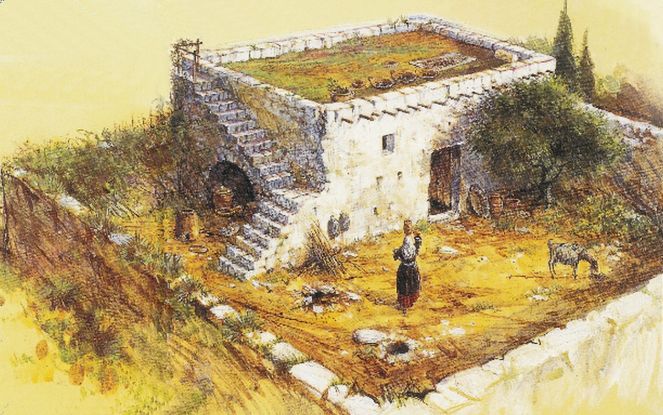
An old woman from Iraq reported that she traveled to Sham seeking to meet the Caliph. People gave her directions until she reached the place they indicated. The moment she laid eyes on the house, she was shocked. There was no palace, no armed guards, and no servants. Instead, there was a modest small house that had no guard at its open door. She asked the people in disbelief if this was the caliph’s house, and they confirmed that it was. She approached the door and entered. Omar’s wife was spinning some cotton. The woman said, “Peace be upon you.” Fatima responded to her peace greetings and invited her to sit down asking about her demands. The old woman said, “I traveled all the way here to seek the caliph’s help in taking care of my daughters. But how can he help me take care of my family if he can’t take care of his?!” Fatima said in his defense, “Taking care of the people is why he cannot take care of his own family.” A few moments later, Omar approached the door of the house. There were some mud at the entrance. He filled a bucket with water and poured it in the entrance. He then grabbed a broom and cleaned the entrance before people started coming in. As he did that, he watched Fatima spinning the cotton. The old woman noticed that. She said to Fatima, “This servant is staring at you. Shouldn’t you do something?” Fatima said, “This is no servant. This is Omar, the Caliph you came seeking.” When Omar finished, he asked Fatima to bring some food for the woman. There was nothing to bring but a bunch of grapes. Omar showed great hospitality to the woman and asked her about her complaint. She told him that she wanted him to set a salary for her five orphaned jobless daughters. Omar brought the inkwell and a sheet of paper. He started writing down his orders to the assigned governor in the woman’s city. “Tell me your daughters’ names one after the other starting with the older one,” he said. When the woman reached the fifth name, he said, “I ordered a salary for your first four daughters only. As for the youngest one, I want you to teach her older sisters how to help each other and raise their young sister.” The woman was grateful for his concern about her daughters’ welfare. She took the decree he wrote and joined a caravan traveling back to Iraq. When she reached the city where she lived, she went to the governor with Omar’s decree. When he saw the decree he cried and said, “May Allah have mercy on the soul of the man who wrote this decree.” The woman was stunned, she said, “What are you saying? Did Omar die?” He told her, “Yes, I received the messenger from Sham.” The woman burst into tears. The governor said, “Fear not my lady. I will make sure that his orders are carried out.” She said, “I’m not crying for that, I’m crying for our loss. He was the most honest man I ever met.”
When the news of his death reached the Roman emperor with whom Omar signed a peace treaty, he said to the messenger, “He was a righteous man. People should not wonder at the poor monks who seclude themselves in monasteries. Nay, they should wonder at a man who had all the means of pleasure and power thrown at his feet; yet, he turned his back to them.” Some reports mention that the Roman emperor sent his physicians to Omar when he learned he was ill.
Omar spent two years as the Caliph then fell ill. On his death bed, his wife Fatima was sitting beside him holding his hand. He looked at her and said, “Fatima, I’m starting to see luminous creatures filling the room, let me be.”
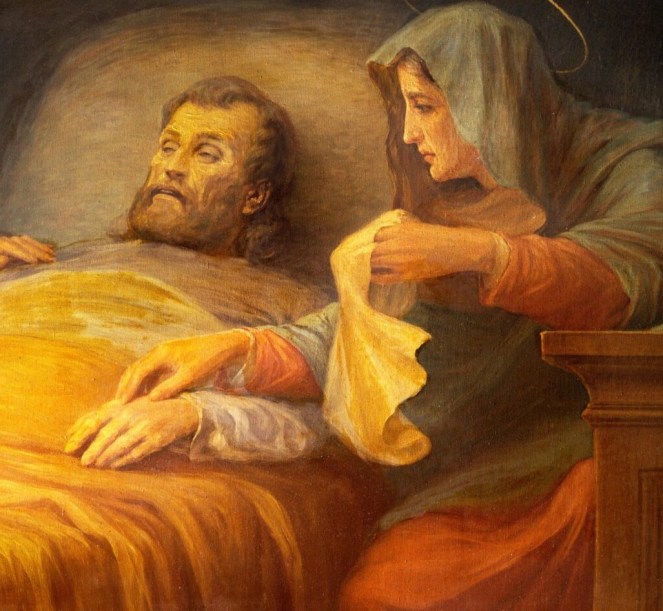
Omar died at the age of 40. Yet, his legacy has been living among our nation for the past 1300 years. Our parents taught it to us, we teach it to our children, and so will they teach it to theirs. Hopefully, one day this legacy will be revived, and our nation will once again find its just rulers. After his death, Fatima continued to live in the poor house. She refused to move to any of her folks’ palaces. She died 4 years later in her late thirties. May Allah gather them both forever in heaven among His virtuous servants, Amen.
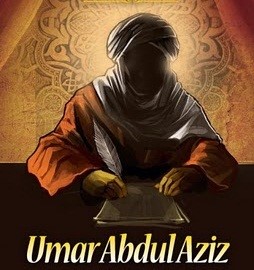
Omar Ibn Abdul-Aziz, The Just Caliph.
Written by Ehab Shawky.
Discover more from Islamic Methodologies Made Easy
Subscribe to get the latest posts sent to your email.
 Islamic Methodologies Made Easy