9. Assad Nimer Busool
A Brief about him:
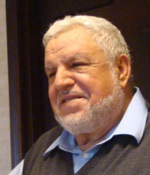 Dr Assad Nimer Busool was born in Reina, Nazareth, Palestine. He received Bachelor and Masters degrees in Classic Arabic Literature and Islamic History and Civilization from the Hebrew University, Jerusalem. He received a Masters degree in Library Science, and Ph.D., in Arabic and Islamic Studies from the University of California, Berkeley, California. He taught Arabic and Islam at the University of California, Berkeley; San Diego State University, San Diego; the University of Minnesota, Minneapolis; and was a Professor and Chairman of the Department of Arabic Studies at the American Islamic College in Chicago. Dr Busool is a prolific writer and has published books, articles and short stories in English, Arabic and Hebrew. Dr Busool has translated the Qur’an into English and Hebrew, and many different collections of forty Hadith.1 Among the books he authored are: “Sermon of the Prophet”, “Forty Hadith”, “A Guide for the Young Muslims”, “Learn the Arabic Alphabet Through the Beautiful Names of Allah” and “Bouquet of the Noble Hadith”.
The Purpose of this Work:
Dr Busool says the following in his work’s preface:
“To tell the truth, I did not initiate the idea of translating the book of God on my own, even though I felt for a long time that there is a need for a more accurate and clear translation of the Qur’an than the existing translations. In fact, it was the idea and encouragement of some of my good brothers in the Qur’an Society of Greater Chicago. I have been studying and interpreting the wise Qur’an with these brothers for the last ten years. Indeed, I learned a great deal from the discussions with those noble brothers. May God reward them with paradise for their sincere effort in diligently studying The Book of God. However after closely examining some of those translations, I found how inaccurate, often wrong, and unclear they are. To support my claim, I would like to present here a bold example of a serious mistake of translating verse 15 of surat al-Buruj 85. the verse reads in Arabic,
“ذو العرش المجيد” should be correctly translated “The Glorious Lord of the Throne”.
However, at least 10 different translations that I reviewed translated it “Lord of the glorious throne” There are more mistakes similar to this in those translations. Therefore, willingly I embarked in this monumental task, asking God’s help for me to bring forth a far more accurate translation to the best of my ability.”
As explained on his site, the purpose was as follows:
“English translations or rendering of The Wise Qur’an are very many. According to certain statistics, there are around sixty translations in English. However, the majority of them contain some major errors and mistranslations. Author Assad Nimer Busool, PhD brings forth a grammatically accurate English translation—made to the best of his ability—of Allah’s Wise Book as he pens the translation of The Wise Qur’an: “These are the verses of The Wise Book”.2
Having been studying and interpreting the Qur’an for a long time already, Dr Busool has long believed that there is a need for a more correct and clear English translation. “I found how much inaccurate, often wrong, and unclear they are”, he states. Dr Busool was hoping that with his translation, readers will be able to understand The Wise Qur’an better.
The Adopted Style:
Dr Busool said the following in the preface of his work:
“This translation is in essence based on a wide range of classic and modern Arabic Qur’an interpretations, from the Tafsir of Al-Tabari (d. 310 H / 923 CE) to Sayid Qutub (d. 1965). In addition to all this, I utilized a wide range of collections of Hadith, Sirah, Classical Arabic Literature, and other Semitic languages, especially Hebrew, the sister language of Arabic. I strongly refrained from imposing, or interjecting my personal opinion and feelings in the translation and in the explanatory remarks within the text or in the footnotes, as some translators did in their translation. Moreover, I strongly believe that there is no room for personal opinion or feelings in the Qur’an translation whatsoever. The translator, as much he/she can must be faithful to the original Arabic text.
I have added cross-references to the verses that speak of the same idea, theme, or personality in my footnotes. This way, I have established a kind of subject-matter index.
In addition to all these, I have added appendices to my translation including facts about the wise Qur’an from the wise Qur’an, which in many ways will help the reader to understand the wise Qur’an better. Doing this, I let the wise Qur’an speaks for itself.”
In their description Xlibris Corporation had the following to say:
“The translator radical shift from all the existing translations is his translation of verse 34 of Surat An-Nisa’ 4, where the Arabic term, “Wa-d-dribuhunna”, is translated by all the translators of The Wise Qur’an, “Beat them”, i.e., women or “Hit them.” Instead, he translated it, “Make love to them.” For a detailed discussion of this translation, the reader should read appendix 1 of this translation.”
This is a strange opinion adopted by a very few number of contemporary scholars who said that the word “Wa-d-dribuhunna” is from the Arab’s expression: “Daraba Al-Jamal Al-Naqah” which means the male camel had sexual intercourse with the female camel. But all reported opinions from prophet Muhammad and his companions state otherwise. Besides that, metaphors are used to describe an ugly thing in a more acceptable beautiful way, and not vice-versa as would be the case here if this was the meaning intended, which will lead to a worse conclusion; that Allah doesn’t know how to express things in the proper way; which could never be the case. Moreover, Allah used the word “Wa’tuhunna” in many places in the Qur’an, so why would He express it differently here using a word that will give a totally deviated impression?! It seems that Dr Busool wanted to dodge the wrong impression of the literal translation of “Wa-d-dribuhunna” on the non-Muslim reader who has no knowledge of the Islamic teachings regarding the verse under discussion.
For the contradiction between the previous with what Dr Busool said, and since that I believe that the translation of this word that is being employed by Dr Busool here is wrong, this leaves me under the impression that his translation needs to be thoroughly revised and evaluated.
Selected Reviews:
I found a sole review of this translation, it was given by a student of Dr Busool.
A beautiful translation by a great Muslim scholar March 12, 2011
By Rose Hobart
“I had the great honor and privilege to take Arabic lessons from this great Muslim scholar. Dr Busool is a brilliant academician and philologist who has written many books in Arabic, Hebrew, and English. As a teacher, he was wise, kind, ironic, fascinating, and truly informative. I felt as if I was in Harun-ar-Rashid’s Baghdad, although Dr Busool is no archaic throwback. Rather, he is a modern who is the product of an illustrious past with which he is utterly conversant.
I also had the honor of reading almost a quarter of the Suras as he translated them in manuscript, with his countless revisions throughout the process. We used these MSS. in class and it brought great depth to our studies of the Book itself, grammar, Hadith, Classical Arabic, the meaning of religion, custom, poetry and so on.
I was deeply moved and impressed with Dr Busool’s extraordinary command of English: his translation did take the previous English versions into account (Arberry, ‘Ali, Pickthall, et al.), but he has aimed for something quite different. It seemed to me to be an attempt to get away from the heavy influence that the King James Bible has had on English translations of religious texts from non-Christian sources, without devolving into a crude and simplistic vernacular. A sort of third way in language, informed by awe and remove, yes, but also independent of the clunky and aloof pastiche that has become a kind of cheap shot in English vis-à-vis the sacral languages. The King James Bible is indeed beautiful, but using it as a quick template has the pitfall of reducing all translations to a somewhat arcane, phony English. The English of the King James is unique and should remain so. English is a mongrel tongue, which can be a great strength, as long as it used innovatively and not as a grandiose imitation of the source text. I feel that Dr Busool has done this.
I also must note that unlike many earlier translators, Dr Busool has the vast corpus of Qur’anic commentaries (tafasir) at his fingertips. He utilized this great world library throughout his work, and was not confined simply to one doctrine. This is profoundly important.
Disclosure: I confess that I haven’t read the final book, but based on what I have read as part of our lessons together, I thought it was marvelous. Dr Busool also consulted non-Muslims and native English speakers for continuity and sense in his work, as well as his academic colleagues in English grammar studies and so on. Of course, no English can ever contain or even hold a cracked mirror to the Qur’an’s unearthly Arabic, but a translation such as this will certainly make any reader want to read the original language. Or at least listen to a Qur’an recital. And if not, then this book will offer a profound gaze into the world of Islam, a world (actually, many worlds) so different from the narrow racist mirage invented by an uninformed, xenophobic and frightened gaggle of mercenary pundits.
I have read several English ‘translations’ of the Noble Qur’an. In my opinion as an ordinary American, this one must be the best. You will not be disappointed.”
References:
- http://assadbusool.wordpress.com/
- http://assadbusool.wordpress.com/books/the-wise-qur%E2%80%99an/
- http://www.islamicbookstore.com/b11397.html
- http://www.amazon.com/The-Wise-Quran-Multilingual-Edition/product-reviews/1453525246/ref=cm_cr_dp_see_all_btm?ie=UTF8&showViewpoints=1&sortBy=bySubmissionDateDescending
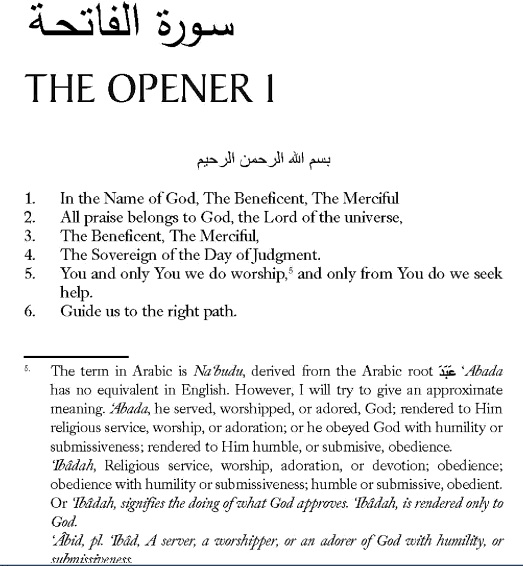
A sample of Dr. Busool’s work:
10. Yahiya Emerick
A Brief about him:
 Emerick was born into an American Protestant Christian family, and converted to Islam in 1989 while a freshman at Michigan State University. He later obtained a graduate degree in history. Emerick has served as a Muslim lecturer, educator and prayer leader, but his greatest fame has come as an author. He founded Amirah Publishing in 1992, in order to further his goal of publishing American-oriented literature on Islam. He is the former President of the Islamic Foundation of North America, vice-principal at an Islamic school, and a Muslim author. He has written several articles and works of fiction that have been published in North America and abroad. Emerick’s “Complete Idiot’s Guide to Understanding Islam” has been distributed worldwide by Alpha books, while his juvenile fiction books have been rated amongst the very first examples of the Islamic fiction genre. From 1998 until 2008 his books were all published by Noorart Inc. Among the books that he wrote are: “Learning About Islam”, “Complete Idiot’s Guide to Rumi Meditations”, “The Meaning of the Holy Qur’an in Today’s English”, “My First Book About Islam”, “What Islam is All About”, “The Seafaring Beggar and Other Stories” and “How to Tell Others About Islam”.
The Purpose of this Work:
I couldn’t find much about this, but it seems that Emerick is trying to facilitate the understanding of Islam to all westerners through his books in general, and this translation came in this course. According to the reviews on the internet; it’s the easiest translation of the Qur’an so far, and the most helpful in understanding Islam.
The Adopted Style:
Emerick used modern American free-flowing English in his translation, background information is provided for the reasons of revelation, which gives the reader a thorough view to the context of what he/she is reading and throws some light on the historical events. The footnotes option is used for further explanation. This is one of the most comprehensive translations produced so far.
Selected Reviews:
“A Journey through the Holy Qur’an is by far the best translation of the Qur’an into English. The translation is written in modern American English and at a level that even a middle school student can understand. Complementing the translation, the author has interspersed into the text the historical context in which individual verses of the Qur’an were revealed. In addition, several invaluable appendices address such misunderstood topics as polygamy in Islam (a relatively rare event that is only sanctioned when certain conditions are met), marital discord (contrary to popular belief and the mistranslations of other attempts to render the Qur’an into English, there is no Qur’anic sanction for a husband to ever hit his wife), etc. Without question, this is the single best book for Americans, whether Muslim or non-Muslim, who wish to understand Islam and the teachings of the Qur’an. Certainly, anyone involved in interfaith activities should have this book as the basis for his/her discussion of Islam.”
“Mr Emerick takes the time to not only translate the text into modern English but to also provide historical background information so that the reader has a context in which to understand the revelations. Too often the Qur’an is taken out of context and used to promote the agenda of the person quoting the information(whether it be pro or con). This book should help provide a truer understanding of the Qur’an and the context of the guidance it provided and continues to provide.”
“This is the easiest and most free-flowing translation of the Qur’an in the English language. Everything is so smooth. There are little stories interspersed throughout explaining the reasons for the revelations of the different passages. You will feel as if you are understanding the Qur’an for the first time!”
“Misleading. The author tries to hide the Violence, and hatred verses, and those that support terrorism. Read Koran in Arabic and see for yourself!”
“I already own four different translations of the Qur’an and have been making my way through it pretty slowly for some time now. I’m used to reading at a high level, so it’s not that the Qur’an is such difficult reading – it’s more that the Qur’an’s mode of expression is so different from just about everything else we read in the West. The language is more elaborate and one must read very carefully to make certain to catch it all. Prior to purchasing this translation, I had been most helped by Muhammad Asad’s fine translation which I received from CAIR, and for which I am extremely grateful. Yahiya Emerick’s edition is helpful because the language used is very clear and very contemporary, but even more helpful are the many, many notes Yahiya Emerick has included throughout the text to help the reader understand not just the meaning but also the context of what they are reading. This has completely opened up the text to me in ways that it has never been opened before. My studies of the Qur’an are more energized and more fruitful than they have ever been as a result. I also appreciate the fact that this translation does not include the Arabic text. Why? Because this means that I can highlight and make notes in this edition and not worry about being disrespectful to the revealed text, like I used to do in my Bible. I cannot recommend this translation highly enough to anyone seeking to really understand the text of the Qur’an.”
References:
- http://www.amazon.com/A-Journey-through-Holy-Quran/product-reviews/1450521533/ref=cm_cr_dp_see_all_btm?ie=UTF8&showViewpoints=1&sortBy=bySubmissionDateDescending
- http://en.m.wikipedia.org/wiki/Yahiya_Emerick
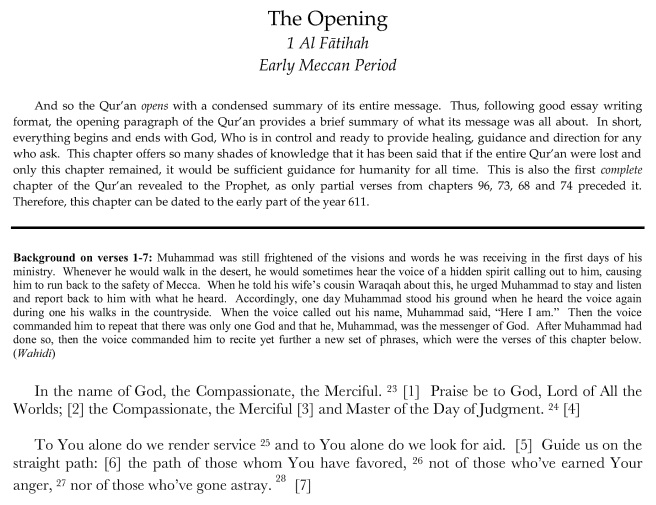
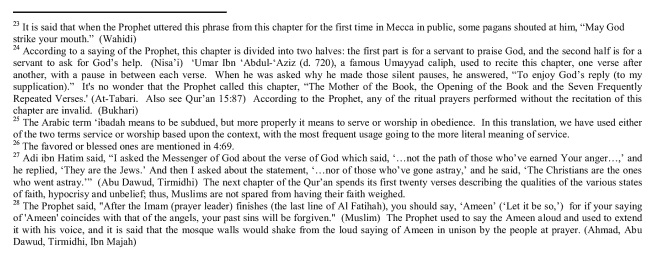
A sample of Emerick’s work:
11. Ahmad & Muhammad Hamed
A Brief about them:
Professor Ahmad Hamed was born back in 1892 to Hamed Bey Mahmoud, Chief chancellor of the court of Appeal. He entered the school of medicine at 17 years of age and acquired his MB, BCh in 1915. He prepared his PhD in Cambridge and discussed it in 1923. Just like every Egyptian youth at that time, he was attracted to politics, so he joined the Egyptian nationalist party that was headed by Mustafa Kamel Pacha, whose motto was “No negotiations till after evacuation”. He started translating the Qur’an back in 1933 after a very interesting incident. In 1937 he dedicated what he had finished from his translation to the newly crowned King of Egypt “Farouk the 1st“, accompanied by a beautiful dedication, in which he said:
“To Our Guardian, Farouk the First, King of Egypt,
This is the Book of God in part, whose meaning I have tried to impart, aiming to propagate His Guidance, requesting naught but His Acceptance, to you have I fashioned of it a crown, radiant and illuminating in renown, to utilize as a lantern to guide, the non-Arabic speakers in tides…..”
However, the Chief Chamberlain refused to accept the gift except if Prof. Hamed changes the dedication from “To Our Guardian” to “To His Majesty”, but Prof. Hamed refused to do so, expressing to him that Majestical titles should only be used when referring to Allah and that King Farouk was simply our guardian on earth. This concept of thinking did not appeal to the ears of the Chamberlain and the gift did not reach the crowned king. Later on, in 1940, Prof. Hamed met with Prof. Woodburn Morrison, the professor of radiology at Edinburgh University, who was also a Dr. of Divinity. When he heard of Prof. Hamed’s work he bought him as a present two of the most important works in the English language at that time: “Thesaurus of English words and phrases”, and “Modern English usage”. He wrote on them “With all good wishes in your endeavors”.
In 1942 Prof. Hamed met with Reverend Archbishop Gwynne, who was the head representative of the church of England in Egypt and Sudan at that time. He was very interested in what Prof. Hamed was doing. He encouraged him to apply for acquiring a doctoral degree in English literature with this translation from Cambridge University, who replied to this request later stating that Prof. Hamed must be a resident for at least 6 months at Cambridge in order acquire such degree. Prof. Hamed’s post at Cairo University and his responsibility towards his family made him refute the idea. After finishing the translation of about one-fifth of the Holy Qur’an, Prof. Hamed got ill and died in October 1951.
Professor Muhammad Hamed was born back in 1928 to professor Ahmad Hamed. As a child, his father applied for him in an English mission college in Cairo in order to perfect his son’s English language. The headmaster made it clear for Prof. Hamed that his son will have to learn the Christian religion at school with his colleagues. Seeing the negative impression on Prof. Hamed’s face, the headmaster suggested that the young boy may learn Christianity at school and Islam at home, and when he is old enough let him choose. Prof. Hamed accepted this new challenge. Prof. Muhammad Hamed narrates the following in the preface of his work:
“When I repeatedly scored top marks in the scripture examinations and tests, I was asked by one of my teachers as to how this could be. My answer candidly was that I considered it a sort of history of ancient times. At the same time, I explained to the teacher that my religion, Islam, recognized and believed in all the prophets we were studying, though perhaps with different details. Nevertheless, the messages they all transmitted were essentially the same as ours.”
As head perfect student, young Muhammad Hamed was selected to give an Arabic speech during the school graduation ceremony in 1945, from what he said was the following:
“The school being a mission school teaching Christianity to all student alike, has given us, non-Christian students, a golden chance to fathom with depth and thus better understand the Christian faith. It has also afforded us an admirable opportunity to witness how a group of teachers, true to their faith, were upholding the religion they were teaching. Thus they set the example for us to uphold and forward our own religion with equal fervour.”
After graduation, Prof. Muhammad Hamed studied to become a doctor. He is currently the Emeritus Prof. of pediatrics and consultant pediatric cardiologist at the Medical Academy, Cairo. He was the founding president of the Egyptian society for pediatric cardiologists (1995 – 98). His medical career was punctuated by 110 research publications. He was also the English Language editor of several local and international medical journals, which gave him an acute sense of precision and clarity, being himself a man of science.
The completion of his late father’s translation for the meanings of the Qur’an became one of his long-cherished aims in 1996. His wife’s death in 1998 made him more persistent on finishing this work and bringing it to the light, being his only solace. He finished the translation in 2004, which was later revised and approved for publishing by Al-Azhar research academy in 2007, and finally printed in 2011.
The Purpose of this Work:
After studying natural sciences in Cambridge and being affected by Darwin’s evolution theory, Prof. Hamed fell in a theological turmoil which culminated into a “scientific faith”. In 1924 he used to teach his students saying: “This world you see in front of you was created by some hidden force or power. Some call it nature, and others call it God, so call it whatever you may.” Ten years later in 1933, during the month of Ramadan, three workmen were performing some tasks in his house, as the customs were, the table was set before the Maghrib Adhan, and when it was time, all of the household members and the workmen gathered around the table to break their fast and eat together. After finishing their meal, the 3 workmen excused themselves to pray. There they stood praying with their Imam reciting the Qur’an in a beautiful voice and Prof. Hamed watching. He was really touched by their recitation and piety while praying. That night he took the Qur’an and started reading with eagerness and consulting books of tafsir. After this Prof. Hamed was convinced that this book constituted a whole way of life that should be presented to all people. Being a master of the English language, he decided to start translating the Holy book, which was later completed by his faithful son and published in 2011. I believe that Prof. Hamed had truly sincere intentions and this is why Allah didn’t let his efforts be in vain.
The Adopted Style:
Prof. Muhammad Hamed says the following in the preface of this work:
“The uniqueness of both my father’s attempts as well as mine, is that we have tried to keep the rhythm and melodious rhyme, so beautifully portrayed in the Arabic text, except in the Surahs where this rhyme does not exist. This attempt to use a rhythmic and musical flow of the translation does not in any way presume to imitate the inimitable text of the glorious Qur’an. But carried by the wave of beauty of the original text, the authors have tried to convey not only the meaning, but also the spirit of the Holy Book to the English reader. “
Later he added: “Where the translated text portrays the meaning, the translation is nearly literal. Where the Qur’anic text is not easily understood, some of the meaning is added to clarify the translated text, and where this can be made to rhythm, it adds a literal dimension to the whole.”
The translators use footnotes only when necessary in order to protect the reader who has no knowledge of the Islamic teachings from going astray in his/her understanding, like in verse 34 of Surat Al-Nisaa’ where they explain the meaning of “Wadrebuhun”. A brief statement about every Surah is made at the beginning which helps the reader to have an initial idea about what he/she is going to read.
Selected Reviews:
From what I have read so far in their work, my personal review of this translation is that it has been made with great care and true observation for the scholarly opinions, but without placing these opinions in front of the text like most translators do. Beautiful literary modern English has been employed in a way that does not underestimate the Holy scripture’s value and magnitude. It is almost a word for word translation with the least additions when necessary. The rhyme is beautifully and sensibly preserved. The vast knowledge of the English language, and the broad minds of the translators springs out from their work. I can absolutely say that these two men really were filled with love for their religion and for that Holy Book, and they really had a sound conscience. May Allah accept this work.
References:
- Meaning of the Holy Qur’an translated into English by: Ahmad Hamed and Muhammad Hamed.
A sample of Prof. Hemed’s work:

12. Muhammad Tahir Ul-Qadri
A Brief about him:
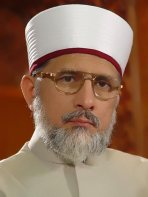 Qadri was born on 19 February 1951 in Jhang. His father Farid-ud-Din Qadri was an Islamic scholar and his ancestors belonged to the Punjabi Sial family. Qadri’s primary education took place at the Sacred Heart School in Jhang, where he learned English and was exposed to Christianity. He formally started his Islamic education under Diya’ al-Din al-Madani at the age of 12. Qadri studied law at the University of the Punjab in Lahore, where he graduated with an LLB in 1974, gaining a Gold Medal for his academic performances. Following a period of legal practice as an advocate, he taught law at the University of the Punjab from 1978 to 1983 and then gained his PhD in Islamic Law (Punishments in Islam, their Classification and Philosophy) from the same university in 1986. He was appointed as a professor of law at the University of Punjab, where he taught British, US and Islamic constitutional law.
On May 25, 1989, Qadri founded a political party: Pakistan Awami Tehreek (PAT). This party aims to introduce the culture of democracy, economic stability, improve the state of human rights, justice and the women’s role in Pakistan. The PAT also aims to remove corruption from Pakistani politics. Qadri is also the founder and Chairman of Minhaj-ul-Quran International. In March 2012 he was described by CNN-IBN as an ‘International Peace Ambassador’. He was also elected as a Member of the National Assembly for his constituency. On 29 November 2004, Qadri announced his resignation as a Member of the National Assembly. Qadri views an Islamic state as a Muslim-majority country which respects freedom, the rule of law, global human rights (including religious freedom), social welfare, women’s rights and the rights of minorities. He also claims that the Constitution of Medina “declared the state of Madinah as a political unit”. He also mentions that the Constitution declared the “indivisible composition of the Muslim nation (Ummah)”. With respect to the Constitution of Medina, Qadri says: “This was the constitution, which provided the guarantee of fundamental human rights in our history.”
Qadri founded a Sufism-based organization, Minhaj-ul-Quran International, in October 1981 and has subsequently expanded it nationally and internationally. In 1987, the headquarters of Minhaj-ul-Quran, based in Lahore, Pakistan, was inaugurated by Sufi saint Tahir Allauddin, who is regarded as the organization’s spiritual founder. The organization aims to promote religious moderation, effective and sound education, inter-faith dialogue and harmony, and a moderate interpretation of Islam employing methods of Sufism. Over the past thirty years, the organization has reportedly expanded to over ninety countries. During its March 2011 session, the United Nations Economic and Social Council granted special consultative status to Minhaj-ul-Quran International.
On 2 March 2010, Qadri issued a 600-page Fatwa on Terrorism, which is an “absolute” scholarly refutation of all terrorism without “any excuses or pretexts.” He said that “Terrorism is terrorism, violence is violence and it has no place in Islamic teaching and no justification can be provided for it”. The US State Department declared the fatwa to be a significant publication which takes back Islam from terrorists. Qadri told the American Foreign Policy magazine: “I am trying to bring [the terrorists] back towards humanism. This is a jihad against brutality, to bring them back towards normality. This is an intellectual jihad”. Qadri has authored some 400 published works in Arabic, English and Urdu.
The Purpose of this Work:
As a scholar who has deep knowledge of Islam, perfect command of the Arabic language and English as well, Sheikh Qadri wanted to contribute in delivering the meanings of the Qur’an to the non-speaking Arabic world based on his vast knowledge and understanding. According to Minhaj-ul-Quran Publications: “There have been many English translations in the past; however the English translation by Shaykh-ul-Islam Dr Muhammad Tahir-ul-Qadri is regarded as one of the most correct, reliable and most fluent English translations available in the western world.”
The Adopted Style:
Sheikh Qadri used contemporary modern English in his translation. He always makes links between the verses in order to retain the connection between the verses and facilitate their understanding. The text is self-explanatory; for Sheikh Qadri employed a hermeneutical system while observing the linguistic meanings of the Arabic text. He places the words added between brackets, and the explanatory notes as well. He scarcely used footnotes, and in case he did they are short footnotes.
Selected Reviews:
In their presentation of this work, Minhaj publications described it as follows:
Employing a unique system of hermeneutics, Shaykh-ul-Islam Dr Muhammad Tahir-ul-Qadri, a preeminent scholar and recognized authority of Islam, has produced a fully explanatory translation of the Qur’an into modern English, which at the same time maintains strict linguistic accuracy in relation to the original Arabic.
The translation features parenthetic explanations in step with the translated sentence structures, which are also consistent with the structures of the Arabic text, and which conform to the Prophetic traditions and established exegetic principles. The result is a beautifully rendered translation, which provides clarity and precision in meaning without the need for lengthy footnotes.
While keeping its exegetic quality the translation strictly adheres to the original Arabic text of the Qur’an without modification or accidental alteration.
The approach used allows a number of other important benefits, including conformity with confirmed and extant scientific knowledge; the expression of the multiple layers of Qur’anic meaning; and elucidation of the inner spiritual dimensions of many verses.
Produced by the author of the renowned Fatwa On Terrorism and Suicide Bombings, the translation clarifies the oft-misunderstood concept of Jihad by contextualizing the verses enjoining military struggle, dispelling the grave misunderstandings on this issue that have arisen on the part of both Muslims (particularly that section predisposed to violent extremism) and non-Muslims. Special consideration has also been given to verses dealing with relations with Jews and Christians and other non-Muslims in order to inform interfaith activity and relationships within wider society.
References:
- http://www.minhaj.org/english/tid/14838/The-Glorious-Quran-English-Translation-by-Shaykh-ul-Islam-Dr-Muhammad-Tahir-ul-Qadri-published-from-UK.html
- http://www.minhajpublications.com/?p=114
- http://www.minhajpublications.com/?page_id=748
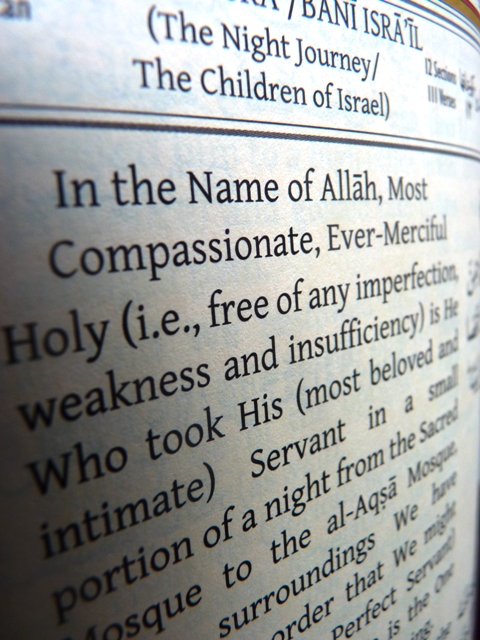
A sample of Sheikh Qadri’s work:
13. Nazeer Ahmad
A Brief about him:
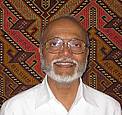 Nazeer Ahmed is a scientist, inventor, historian, legislator and philanthropist. He was born in Tumkur in the princely state of Mysore, India in 1939 into a farming family. His father Abdul Azeem was a Sufi spiritual scholar of the Qadariya Order. He achieved the first rank to the state in the public examination of 1952 and won the Maharaja of Mysore gold medal. In 1961 he proceeded to the California Institute of Technology as Institute Scholar and as a Tata Scholar. He obtained his MS and AeE degrees from Caltech. In 1964-65 he worked in Huntsville, Alabama on the Saturn, Apollo and Lunar Land Rover Projects at the Marshall Space Flight Center. In 1967 he obtained a PhD in Theoretical and Applied Mechanics from Cornell University. He studied management under Peter Drucker at New York University and obtained an MBA from Rider University, New Jersey. In 1977, he returned briefly to India and was elected a member of the Karnataka Legislative Assembly from the 57th constituency. Ahmed worked as project manager on the Hubble Space Telescope. He designed, assembled, tested and delivered diffraction-limited performance in its secondary mirror assembly. Ahmed holds twelve U.S. patents in advanced composites and space-based lasers. He was a chairman of the AIRAPT conference in high-pressure physics in Denver, Colorado in 1977. He has published papers in several scientific journals.
Ahmad has written extensively on Islamic history and culture. His two-volume study Islam in Global History was published in the United States and translated into Urdu. He is the author of an Encyclopedia of Islamic History (History of Islam) and a spiritual treatise “What Makes Us Human?”. As of 2012, Ahmed was the director of the American Institute of Islamic History and Culture in California and an advisor to the World Organization for Resource Development and Education in Washington, DC and to HMS Institute of Technology, India. He also serves on the Steering Committee of Elijah Institute, Jerusalem, Israel. Ahmed was elected a delegate to the Democratic National Convention, 42nd Congressional District in California in 1988. He was a candidate for US Congress, 46 CA Congressional District in 1992. In India he set up a scholarship fund in the late 1990s called ‘Rank Nazeer Foundation’ to support poor students.
The Purpose of this Work:
Dr Nazeer says the following in the preface of his work:
“The Qur’an is not an ordinary book. It is a luminescent Lamp that radiates Light. It is Guidance. It is self-sustained eloquence where the Word is bigger than itself. It is the Voice from the Heavens, the Word of God. It is with the utmost humility that I have attempted a translation of the Qur’an. It is an honor that Divine Mercy bestows upon a select few and those who do make this attempt dive into an infinite ocean of spiritual bliss that transforms them, overwhelms them and leaves them thoroughly exhausted yet completely satiated. The Qur’an just cannot be translated. It’s variegated meaning, elliptical passages, subtlety and grandeur do not lend themselves to a translation into another language. The Awliyah (sages) have said that every Word of the Qur’an has forty thousand meanings. Each word is like a diamond that shines in different colors under different wavelengths. You see in it what you can perceive and what you feel is limited only by the capacity of your heart to absorb it. As stated by the Qur’an:
Say: “If the ocean were ink For (writing) the Words of my Rabb (Creator, Sustainer and Cherisher),Then, the ocean will be exhausted before the Words of my Rabb are completed, Even if We bring another ocean to help it.” (18:109)
As to what one understands of the Divine Word is ultimately a reflection of the Grace of God upon one’s heart. In addition, each language is culture-bound. English, a modern language with a rich scientific and technical vocabulary, is different from the classical languages like Sanskrit, Arabic, Hebrew, Latin and Greek. Even these classical languages reflect their own historical, linguistic and cultural roots. Those who wish to study the Qur’an and feel its Divine vibrations must, therefore, hear, read and understand it in the Arabic language. That said, Muslim scholars have through the ages, considered it an honor to attempt a translation of the Qur’an……. Noble as each effort is, each translation reflects the understanding of its author and suffers from the human and cultural limitations of each scholar.”
The Adopted Style:
Dr Nazeer says the following in the preface of his work:
“The current translation was done over a period of three years between 2007 and 2010 although some of this work dates back to 1972. It is distinguished by the following characteristics:
- It is done in easy to understand American English
- It stays true to the literal meaning of the Arabic words
- It attempts to bring out the universal, loving appeal of the Qur’an
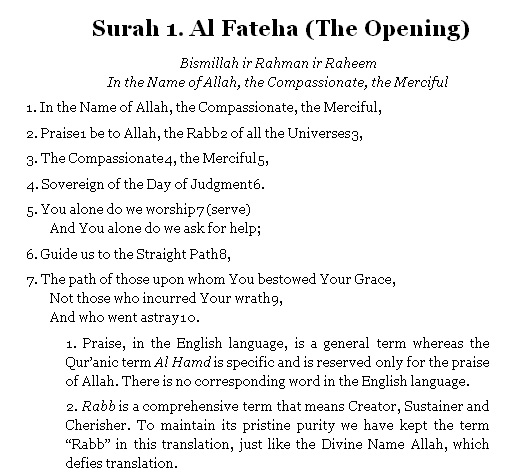
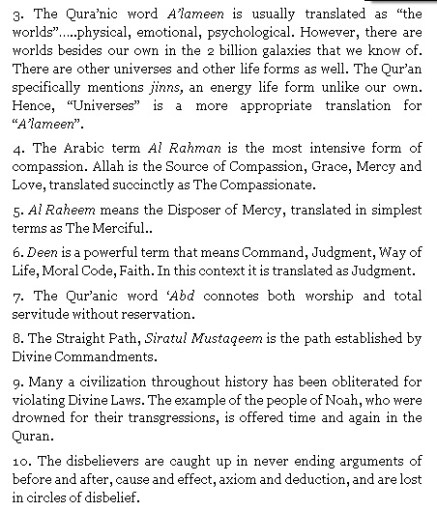
I have used some of the Arabic vocabulary of the Qur’an as is. For instance, Allah is used throughout the translation instead of the English word God. While God can be written as god, the plural of which is gods, the word Allah has retained its pristine purity referring to the One God and cannot be manipulated into singular and plural. The message of the Qur’an is strictly monotheistic. Rabb is another word that defies translation. It means Creator, Sustainer and Cherisher. The word Ummah is so often mistranslated as nation. There is no connotation of nationality in the Qur’an. The message of the Qur’an transcends nationality, color, origin, time or locale. Ummah must be translated most appropriately as a community that has reached a certain stage of spiritual development. For instance, Christians, Jews, and Muslims may each be categorized as an Ummah although I am keenly aware that each one is now divided into multiple sects. The Prophet Abraham is referred to in the Qur’an as an Ummah of one.”
It’s worth mentioning here that Dr Nazeer places his short comments between brackets amidst the translation. While for the long comments and explanations he writes them down in the footnotes.
Selected Reviews:
Couldn’t find any on the internet. But when I went through it briefly I noticed that Dr Nazeer like Dr Busool before; mistranslated the word “Waddrebuhun” in his pursuit to beautify the Qur’an and he explained in the footnote that this word has different meanings in Arabic and that one of those meanings is “separate from them”. Again this is absolutely wrong when compared to all Arabic Mu’jams and the prophetic traditions.
References:
- http://www.amazon.com/The-Quran-English-Translation-ebook/dp/B006U95Q0Y#reader_B006U95Q0Y
- http://historyofislam.com/the-quran/
A sample of Dr Nazeer’s work:
The End
Discover more from Islamic Methodologies Made Easy
Subscribe to get the latest posts sent to your email.
 Islamic Methodologies Made Easy
The depth of meaning in Ayatul Kursi is truly astounding
LikeLiked by 1 person