The song of songs is a big dispute among scholars, some argued that it shouldn’t be included in the holy book because of its apparent sexual nature like the famous rabbi Shammai (50BC–30CE, Hebrew: רבי שמאי) who was an important figure in Judaism’s core work of rabbinic literature, the Mishnah. Others stressed its importance like Rabbi Aqiva (17–137CE, Hebrew: רבי עקיבא) of the Hillal school who said: “The entire universe is not as worthy as the day on which the Song of Songs was given to Israel, for all the Writings are holy, but the Song of Songs is the Holy of Hollies.” It was accepted to be part of the Jewish canon and the holy books in the council of Jamnia 90CE.
In short, The “Song of songs” is a book that talks in its clear simple appearance about love, using sexual perplexing expressions that are thought of by most rabbis and priests as symbols. On checking some of the writings of the eastern orthodox fathers, some of them explained that the feminine character in this book is the church and that the masculine is Jesus P.B.U.H., others said that the feminine character is the prayers praising Jesus, among other opinions. The Jews as well have different opinions, some explained that the feminine character was a symbol for Jerusalem and the masculine for God, this view was forwarded by the Midrash, Targum, and Medieval Jewish commentators. Finally some scholars said that it was much simpler than this, the masculine character was Solomon P.B.U.H., and the feminine one was one of his wives, and the whole book was describing their marriage. This last opinion is the strangest of all, because if this was the case, then why would it be included in the Holy Book?!
The only part of the Songs that really caught my attention—as it has done with other Muslim researchers before—is the paragraph containing seven verses at the end of chapter five, they are the description of a person, a certain man whose appearance was found so important. This man’s detailed description and appearance has lived through thousands of years preserved between the verses of the songs which say:
{5:10} My beloved [is] white and ruddy, the chiefest among ten thousand. {5:11} His head [is as] the most fine gold, his locks [are] bushy, [and] black as a raven. {5:12} His eyes [are] as [the eyes] of doves by the rivers of waters, washed with milk, [and] fitly set. {5:13} His cheeks [are] as a bed of spices, [as] sweet flowers: his lips [like] lilies, dropping sweet smelling myrrh. {5:14} His hands [are as] gold rings set with the beryl: his belly [is as] bright ivory overlaid [with] sapphires. {5:15} His legs [are as] pillars of marble, set upon sockets of fine gold: his countenance [is] as Lebanon, excellent as the cedars. {5:16} His mouth [is] most sweet: yea, he [is] altogether lovely. This [is] my beloved, and this [is] my friend, O daughters of Jerusalem.
The previous verses are describing a man’s appearance, they describe his face, his skin, his hair, his eyes, his scent, his saliva, etc… I believe that the detailed description was mentioned and preserved as a sign for this man’s identity. Let’s analyze the verses bit by bit. Please note that the descriptions given below in front of each part of the verses, is a word for word translation of Prophet Muhammad’s description as given by the prophet’s close companions and by his wife Lady ‘Āʾishah. The verses shall be written in bold, followed by the recorded description.
My beloved [is] white and ruddy: “…..His face was a little rounded, white with a red tinge,…” – “The prophet’s skin was white imbibed with redness, the sweat (drops) on his face were like pearls, I never saw anyone of his like neither before him nor after him.”
chiefest among ten thousand: It’s important here to state again the historical fact that when freeing Makkah (Or Pharan, the homeland of Ishmael and his offspring including Prophet Muhammad, the origin of the Qur’anic revelations, the main capital of Islam, and the land of the sacred mosque that was built and dedicated for worshiping Allah on earth), the prophet was leading ten thousand companions as narrated by all historians, some of whom are: Ibn Ishaq, Ibn Hisham, Baihaqy, Waqedy and others.
His head [is as] the most fine gold: “Whenever the prophet smiled, sparkles almost reflected on to the walls.” – “The prophet had a shining face that shone like the moon, he was the most handsome among all people with the most shining cuticle,…” – “The prophet’s neck was like a jug of silver” – “Whenever the sun shone on his neck, it sparkled like a silver jug with golden gangues.” – “I never saw anything more beautiful than the prophet P.B.U.H., as if the sun runs in his face,…” – “Oh, my son, if you had seen him, it’s as if you saw the sun rise (in his face)”
his locks [are] bushy, [and] black as a raven: “The prophet’s hair was neither straight nor curly and his forelock’s hair reached his earlobes” – “The prophet had extremely black hair.” – “When the prophet passed away, there weren’t more than 20 grey hairs in his hair and beard” – “The prophet’s hair was bushy and wavy”
His eyes [are] as [the eyes] of doves by the rivers of waters, washed with milk, [and] fitly set: “The prophet’s eyes were big and beautiful with dark black colored iris,..” – “The prophet P.B.U.H. Had great eyes with long eye lashes, and the white of his eyes was pervaded with a pale red color.” – “If you were to look at him, you would think that he had kohl in his eyes, which he didn’t.”
Verses 5:12 says that: {His eyes [are] as [the eyes] of doves by the rivers of waters, washed with milk, [and] fitly set}. Doves’ eyes have dark black colored iris and white mottled with red sclera, but the verse continues saying that they are washed with milk, which is of course white colored. If you try to look at a red glassy marble washed with milk, it will appear white with pale red color, which is exactly how the prophet’s eyes were described by his companions. Also note that a dove’s eye is designated from the outside with a thin black line as if it has kohl around it, which is also how the prophet’s eyes were described.
His cheeks [are] as a bed of spices, [as] sweet flowers: “The prophet had smooth plain cheeks” – “… and I never smelled a scent more sweet-smelling than the prophet’s P.B.U.H.” – “One day while the prophet was at our house he fell asleep and he sweat on the bed’s sheet. My mother came with a vial and started squeezing the sheet in to the vial (before the sweat evaporates), this alarmed the prophet and woke him up, he asked her: “what are you doing Um-Saleem?”, she said: “This is your sweat prophet, we put it in our perfumes as it is the most sweet smelling among all scents.”
“his lips [like] lilies, dropping sweet smelling myrrh.” And later “His mouth [is] most sweet”: Regarding the prophet’s saliva, there are many narrations that describe its very special attributes, among those that describe its odor are the following:
Lady Omaira bint Mas’oud (a woman from Madinah) reported that she went with her sisters to visit the prophet, they were five women. She explained that when they entered, they found him eating a hard piece of jerked meat, he cut a piece of it with his teeth, and handed it over to her, she divided it between her sisters and each one of them took a bite from it. She said: “Until my sisters’ deaths, never did any of them have any bad smell coming out of her mouth.” [Recorded by Tabarani and Abu-Na’eem]
Wael Ibn Hajar, the companion said: “I once pulled up a bucket of water for the prophet P.B.U.H., he drank then he spat back some water in to the well. The odor of Musk exuded from the well.” [Recorded by Ahmad and Tabarani]
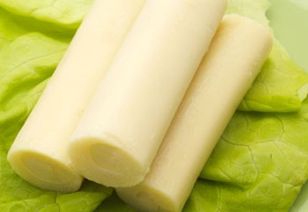
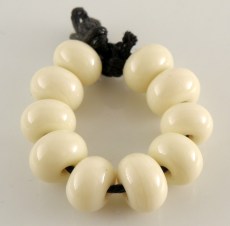
His hands [are as] gold rings set with the beryl: his belly [is as] bright ivory overlaid [with] sapphires. {5:15} His legs [are as] pillars of marble, set upon sockets of fine gold: his countenance [is] as Lebanon, excellent as the cedars: “The prophet’s body shone as if he was created from silver” – “… what appeared to the sun from his neck looked like a silver jug with golden gangues sparkling with the whites of silver and redness of gold, and what’s hidden under his clothes beneath his neck shone like a full moon amidst the night.” – “The prophet had a broad hairless chest, like the mirror in its sternness and flatness, none of his flesh was flabby, and it was as shiny as the full moon amidst the night.” – “The prophet had wide bone structure with broad shoulders…”- “I looked at the prophet’s legs while he was riding his camel, it was as if I were looking at palm pith.”
In case you haven’t seen palm pith before, this is its picture on the left. Ivory is on the right:
Finally, Prophet Muhammad’s name is mentioned loud and clear in the last verse at the end of the description but mistranslated in the English version, for names are not translated from one language to another even if they had meanings, e.g. if your name is “Armstrong” in English, it is still pronounced “Armstrong” in Arabic, as well as in any other language. We don’t translate it to “Bras forte” in French for instance, which is another different pronunciation. If you try to listen to a rabbi reciting this verse in Hebrew you will know that what I’m saying is true. Let’s take a look at this in brief and please remember that Hebrew is read from right to left:
חכו ממתקים וכלו מחמדים זה דודי וזה רעי בנות ירושלם
Pronounced as follows: “Hiko mmtakim V’ekhulo Muhammadim zeh dudi vizeh ra’i bnot yurushalem”
Translated in English as: “His mouth [is] most sweet: yea, he [is] altogether lovely. This [is] my beloved, and this [is] my friend, O daughters of Jerusalem.”
To listen to a rabbi reciting the verse download “Song of songs, 5” from the following link and go to 2:25 on the time bar. Hebrew audio bible
“lovely” is a mistranslation of the word “מחמדים.” In Hebrew “מחמד” is exactly Muhammad in Arabic “محمد” with the same 4 letters and pronunciation. The “ים” added after the name and pronounced as “im,” is used in Hebrew to identify the noun as a masculine plural. It is added to some names in Hebrew as a plural of respect (Like “Mary,” in Hebrew it is “Maryim,” and like “Misr,” in Hebrew it is “Misrim,” etc.). This also stresses the absoluteness of the attribute that stands as the meaning of the name. Like when added to “Aloh” to become “Alohim”, Aloh means: “The one with powers”, while Alohim in the Hebrew terminology means: “The one whose powers are absolute.”
“Muhammad” linguistically speaking means: “The one praised continuously.” The “im” added in Hebrew to the name stress the absoluteness of his praise: “The one whose praise is absolutely continuous,” (for complete understanding, kindly read The Prophecy of Habakkuk). Hence, whether the word “Muhammadim” is the prophet’s name, or the meaning of his name, it is right there, mentioned loud and clear at the end of the description. The one leading ten thousand is mentioned, which reminds us of another sign mentioned in Deuteronomy {33:2} related to a prophet from Paran, this is discussed in Locating Paran thoroughly.
According to this analysis, the proper translation could be one of the following:
“His mouth is confectionary and the all of him, Muhammad is my beloved and is my shepherd subsidiaries of Jerusalem.”
“His mouth is confectionary and the all of him, the one whose praise is absolutely continuous is my beloved and is my shepherd subsidiaries of Jerusalem.”
Finally, this was no more than my analysis for some verses that caught my attention when I first read them years ago. You can consider this post a light chat that occurred inside my mind, and I just wanted to put it down in writing. In my opinion, whether the man described could be identified as Prophet Muhammad or not, is not of a great importance, and it’s absolutely up to the judgment of the reader.
N.B.: For complete understanding, kindly read my relevant posts: The Prophecy of Isaiah, The Prophecy of Habakkuk, Locating Paran & The Final Testament.
Written By: Ehab Shawky
Discover more from Islamic Methodologies Made Easy
Subscribe to get the latest posts sent to your email.
 Islamic Methodologies Made Easy